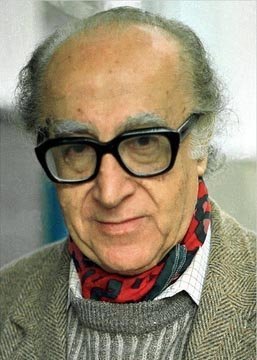
Jabra Ibrahim Jabra
جبرا إبراهيم جبرا
Born: Bethlehem, Mandatory Palestine
Domain: Literature & Poetry
Recognition: Regionally recognized
Member of the Palestinian diaspora
Biography
Jabra Ibrahim Jabra was a Palestinian novelist, poet, critic, painter, and translator, one of the most versatile and cosmopolitan figures in modern Arabic letters. Born in Bethlehem in 1920 into a Syriac Christian family and raised in Jerusalem, he won scholarships to study English literature at Cambridge and later at Harvard, acquiring a deep grounding in the Western tradition that he would spend his life weaving into Arabic culture. The 1948 catastrophe drove him from Palestine, and he settled permanently in Baghdad, where he became a central figure in Iraqi and pan-Arab intellectual life. There he taught, wrote, and helped lead the modernist movement in Arabic literature and art, becoming part of a generation that sought to renew Arabic culture by engaging seriously with global modernism. As a novelist Jabra produced landmark works including "The Ship" and "In Search of Walid Masoud," the latter a sophisticated, polyphonic novel about a vanished Palestinian intellectual that ranks among the major achievements of modern Arabic fiction. His autobiography "The First Well" is a luminous account of a Palestinian childhood. His poetry and his criticism were equally influential in shaping Arabic modernism. Jabra was also an extraordinary translator and cultural mediator, rendering Shakespeare, Faulkner, and dozens of other Western writers into Arabic, and introducing concepts of myth and modern criticism, notably the work of Frazer and the Cambridge ritualists, to Arab readers. As a painter and art critic he contributed to the visual modernism of Baghdad as well. Until his death in Baghdad in 1994, Jabra embodied the figure of the exiled Palestinian intellectual who turned displacement into creative cosmopolitanism. His vast and varied output, spanning fiction, poetry, criticism, translation, and painting, secured his stature as one of the towering humanists of twentieth-century Arab culture and a key bearer of the Palestinian literary legacy in exile.
Why This Person Matters
Jabra was a polymath novelist, critic, and translator who married Western modernism to Arabic letters and gave Palestinian exile its most cosmopolitan literary voice.
Historical Context
Born in Bethlehem in 1920 into a Syriac Christian family and raised in Jerusalem, Jabra won scholarships to Cambridge and Harvard, steeping himself in the Western tradition during the final years of the Mandate. The 1948 catastrophe drove him from Palestine to Baghdad, where he settled permanently and became central to Iraqi and pan-Arab intellectual life. There, amid the cultural ferment of mid-century Baghdad, he helped lead a generation seeking to renew Arabic literature and art through serious engagement with global modernism. His exile turned the loss of homeland into a lifelong project of creative cosmopolitanism.
Historical Context
- — Born in Bethlehem, Mandatory Palestine
- — The Nakba – Palestinian catastrophe and mass displacement
- — Six-Day War and occupation of West Bank and Gaza
- — Passed away at age 74
Selected Works
- In Search of Walid Masoud — A polyphonic novel about a Palestinian intellectual who mysteriously vanishes, leaving behind a tape recording that draws out the memories of those who knew him — considered one of the masterworks of modern Arabic fiction.
- The Ship — A novel of exile and longing set aboard a Mediterranean ship, weaving together the stories of Arab and Palestinian exiles in search of belonging.
Legacy & Influence
Jabra produced landmark novels including 'The Ship' and 'In Search of Walid Masoud,' a polyphonic work about a vanished Palestinian intellectual, alongside the luminous childhood memoir 'The First Well.' An extraordinary translator and cultural mediator, he rendered Shakespeare, Faulkner, and dozens of others into Arabic and introduced Frazer and modern myth criticism to Arab readers, while contributing as a painter and critic to Baghdad's visual modernism. Until his death there in 1994, he embodied the exiled Palestinian intellectual who turned displacement into creative range. His vast output secured his stature as one of the towering humanists of twentieth-century Arab culture.
Topics & Themes
- British Mandate
- Diaspora
- West Bank
References & Sources
- Jabra Ibrahim Jabra — https://en.wikipedia.org/wiki/Jabra_Ibrahim_Jabra
- In Search of Walid Masoud | Institute for Palestine Studies — https://www.palestine-studies.org/en/node/41120
- Remembering Jabra Ibrahim Jabra | ArabLit — https://arablit.org/2018/12/10/5-books-remembering-jabra-ibrahim-jabra/