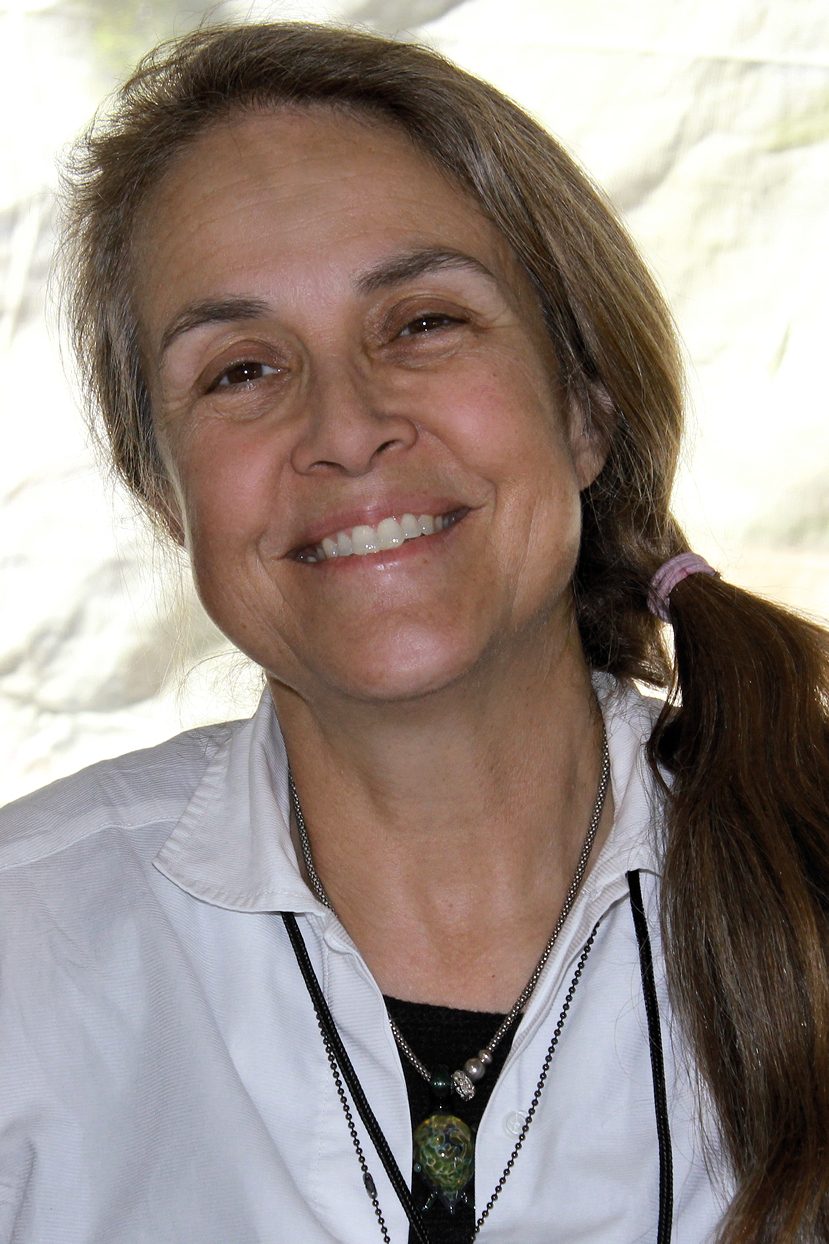
Naomi Shihab Nye
نعومي شهاب ناي
Born: St. Louis, Missouri, United States
Domain: Literature & Poetry
Recognition: Globally recognized
Member of the Palestinian diaspora
Biography
Naomi Shihab Nye, born March 12, 1952, in St. Louis, Missouri, is one of the most celebrated Arab American poets of her generation and the foremost literary voice of the Palestinian American experience. Her father, Aziz Shihab, was a Palestinian journalist and writer who left Jerusalem in the wake of the 1948 Nakba; her mother, Miriam Allwardt, was an American of German and Swiss descent. This dual inheritance — the loss and longing carried in her father's stories of a homeland he could not return to, and the everyday plurality of midwestern American life — became the central material of Nye's writing. She began composing poems at the age of six, and as a teenager in 1966 the family briefly relocated to the West Bank near Jerusalem, where she lived among her Palestinian grandmother and extended family before the household returned to San Antonio, Texas, on the eve of the 1967 war. Educated at Trinity University in San Antonio, where she earned a degree in English and world religions in 1974, Nye built a prolific career spanning more than four decades. She is the author and editor of over thirty books, including the poetry collections Different Ways to Pray, Hugging the Jukebox, Red Suitcase, Fuel, 19 Varieties of Gazelle: Poems of the Middle East, and Transfer, the last written in elegy for her father. Her acclaimed young-adult novel Habibi (1997) drew on her family's West Bank years to tell the story of an Arab American girl encountering her Palestinian roots, and her picture book Sitti's Secrets rendered the bond between a child and her grandmother in occupied Palestine. Working in poetry, fiction, essay, and the picture book, she became a defining figure in bringing Arab and Palestinian humanity into American classrooms and libraries. Nye's poetry is marked by clarity, humane attention, and a refusal of abstraction — finding the political in the domestic detail of food, water, kindness, and the small dignities of ordinary people. Her widely taught poem "Kindness" and the post-9/11 essays and poems gathered in 19 Varieties of Gazelle (a National Book Award finalist) made her a bridge-builder during a period of intense anti-Arab sentiment, insisting on shared humanity without erasing Palestinian grief. She has described herself as a "wandering poet," traveling for decades as a visiting writer in schools across the United States and the world. Her honors are extensive: four Pushcart Prizes, the Jane Addams Children's Book Award, the Robert Creeley Award, the 2013 NSK Neustadt Prize for Children's Literature, a Guggenheim Fellowship, and election as a Chancellor of the Academy of American Poets. From 2019 to 2022 she served as the Poetry Foundation's Young People's Poet Laureate, and in 2024 she received both the Wallace Stevens Award from the Academy of American Poets and the Texas Writers Award, capping a lifetime of recognition. Now based in San Antonio, Nye remains an active poet, anthologist, and mentor whose readings and workshops continue to reach young audiences. Through anthologies of international and Middle Eastern poetry she has championed translation and cross-cultural understanding, and her steady, tender insistence on Palestinian presence in American letters has made her a touchstone for a generation of Arab American writers.
Why This Person Matters
She turned the Palestinian story of exile and tenderness into widely read American poetry, becoming the most recognized literary voice of the Palestinian American experience.
Historical Context
Naomi Shihab Nye belongs to the Palestinian diaspora created by the 1948 Nakba: her father Aziz Shihab fled Jerusalem as a young man and rebuilt his life as a journalist in the United States, carrying with him the memory of a lost homeland. Her own brief residence in the West Bank in 1966–67, under Jordanian rule and on the brink of the Israeli occupation that followed the 1967 war, gave her firsthand experience of displacement and the texture of Palestinian family life. Writing from within the second generation of the diaspora, she gave voice to the inherited grief of the Nakba and to the persistence of Palestinian identity at a moment when that identity was often erased or vilified in American public life.
Historical Context
- — Born in St. Louis, Missouri, United States
- — Six-Day War and occupation of West Bank and Gaza
Selected Works
- 19 Varieties of Gazelle: Poems of the Middle East — A celebrated collection of poems inspired by her Palestinian father's homeland and the Arabic poetic tradition, bringing the voices and landscapes of Palestine to American readers. A National Book Award finalist.
Legacy & Influence
Nye's work permanently widened the place of Arab and Palestinian voices in American literature and education, with poems like "Kindness" and books like Habibi entering school curricula and shaping how generations of young readers encounter the Middle East. Her tenure as Young People's Poet Laureate, her major late-career honors, and her decades of teaching established her as both a literary institution and a mentor; for Arab American writers she remains a foundational model of how to render Palestinian memory with empathy rather than polemic, ensuring that the diaspora's experience holds a lasting and humane presence in the literary mainstream.
Topics & Themes
- Nakba Generation
- Diaspora
References & Sources
- Naomi Shihab Nye — Wikipedia — https://en.wikipedia.org/wiki/Naomi_Shihab_Nye
- Naomi Shihab Nye — Britannica — https://www.britannica.com/biography/Naomi-Shihab-Nye
- Naomi Shihab Nye — The Poetry Foundation — https://poetryfoundation.org/poets/naomi-shihab-nye