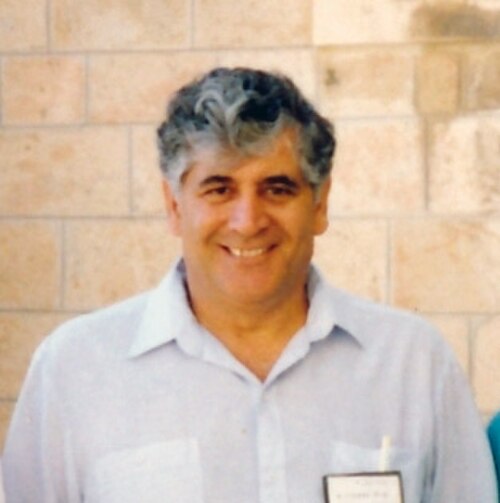
Mubarak Awad
مبارك عوض
Born: Jerusalem, Mandatory Palestine
Domain: Civil Society & Religion
Recognition: Globally recognized
Member of the Palestinian diaspora
Biography
Mubarak Awad is a Palestinian-American psychologist and theorist of nonviolent resistance, often called the Arab Gandhi for his sustained advocacy of unarmed struggle as a path to Palestinian rights. Born in Jerusalem in 1943, he was orphaned at the age of five when his father was killed during the 1948 war and became a refugee in the Old City; his mother's pacifism left a lasting imprint on his moral outlook. He later emigrated to the United States, where he studied social work, education and psychology, earning a doctorate, and absorbed the strategies of nonviolent movements from Gandhi to the American civil rights struggle. He returned to Jerusalem in 1983 and founded the Palestinian Center for the Study of Nonviolence, dedicated to teaching and promoting civil resistance, civil disobedience and constructive community action. Awad's ideas helped shape the repertoire of the First Intifada, with its emphasis on strikes, boycotts, tax resistance, tree-planting and other forms of mass civil disobedience as alternatives to armed confrontation. His work made nonviolence a serious and widely discussed strand within Palestinian political culture and connected the local struggle to global traditions of peaceful resistance. His prominence brought confrontation with the authorities: in 1988 Israel deported him on the grounds that he had forfeited residency by becoming a US citizen, a case that drew international attention. From the United States he continued his advocacy, founding Nonviolence International, an organization that supports nonviolent movements around the world, and teaching new generations of activists. For civil society and religion, Awad matters as the foremost Palestinian apostle of organized nonviolence, a figure who translated ethical conviction into method and institution. His legacy lives in the continuing debates over strategy within the Palestinian movement and in the global network of activists he has mentored.
Why This Person Matters
Called the Arab Gandhi, Awad founded Palestinian nonviolence institutions and helped shape the civil-disobedience repertoire of the First Intifada, making organized nonviolence a serious strand of Palestinian political culture.
Historical Context
Mubarak Awad was born in Jerusalem in 1943 and orphaned at five when his father was killed in the 1948 war, becoming a refugee in the Old City under his mother's pacifist influence. Emigrating to the United States, he absorbed the strategies of Gandhi and the American civil rights movement before returning to a Jerusalem transformed by two decades of Israeli occupation. In 1983 he founded the Palestinian Center for the Study of Nonviolence, and his teaching of civil disobedience, strikes and boycotts fed directly into the popular repertoire of the First Intifada that erupted in 1987. His very prominence provoked the occupation authorities, who deported him in 1988 on the grounds that US citizenship had voided his residency, an episode that drew international attention.
Historical Context
- — Born in Jerusalem, Mandatory Palestine
- — The Nakba – Palestinian catastrophe and mass displacement
- — Six-Day War and occupation of West Bank and Gaza
Legacy & Influence
Often called the Arab Gandhi, Awad's legacy is to have made organized nonviolence a serious and enduring strand of Palestinian political culture, translating ethical conviction into method and institution. The Palestinian Center for the Study of Nonviolence and the civil-disobedience repertoire he helped popularize during the First Intifada remain touchstones in ongoing debates over strategy within the Palestinian movement. After his deportation he founded Nonviolence International, which supports unarmed movements across the world and connects the Palestinian struggle to a global tradition of peaceful resistance. He is remembered as the foremost Palestinian apostle of nonviolence, mentor to generations of activists, and the figure who insisted that unarmed struggle was both a moral and a practical path to rights.
Topics & Themes
- British Mandate
- Diaspora
- Jerusalem
References & Sources
- Mubarak Awad — https://en.wikipedia.org/wiki/Mubarak_Awad
- Mubarak Awad: Lifelong Experience of Dispossession - Jerusalem Story — https://www.jerusalemstory.com/en/article/mubarak-awad-lifelong-experience-dispossession
- Mubarak Awad - Sojourners — https://sojo.net/biography/mubarak-awad