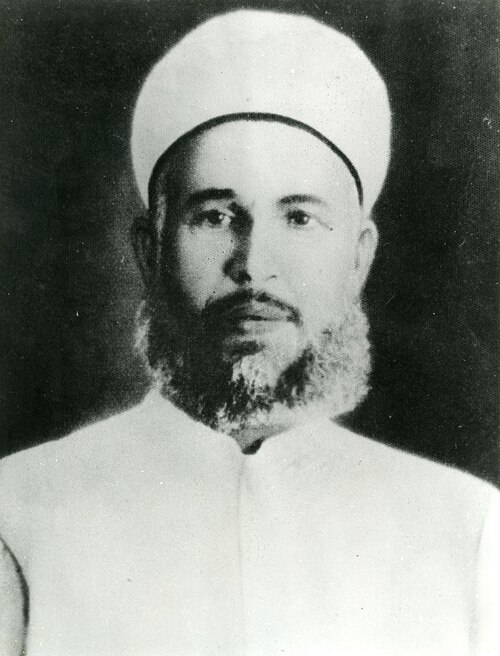
Izz ad-Din al-Qassam
عز الدين القسّام
Born: Jableh, Ottoman Syria
Domain: Civil Society & Religion
Recognition: Regionally recognized
Biography
Izz ad-Din al-Qassam was a Muslim preacher, religious teacher and social reformer whose name became a byword for armed and moral resistance in Mandate Palestine. Born around 1882 in Jableh, near Latakia in Ottoman Syria, he studied at al-Azhar in Cairo before returning to teach and preach in his home region. There he combined religious instruction with grassroots social organizing, denouncing colonial influence and working to reform popular religious practice, an early model of the activist sheikh who linked the mosque to questions of justice and dignity. After taking part in resistance against the French in Syria and being sentenced to death in absentia, al-Qassam fled to Haifa around 1921, where he spent the rest of his life. He became a registrar in the Sharia court, an imam at the Istiqlal Mosque, and a preacher who deliberately sought out the urban poor and dispossessed peasants displaced by land sales. Through the Young Men's Muslim Association and night classes for laborers, he built a base among people whom the notable-led national leadership had largely ignored, fusing religious revival with concern for the material plight of the Palestinian fellahin. Convinced that petitions and elite politics would not stop dispossession, al-Qassam organized clandestine cells and preached a doctrine of jihad against both British rule and Zionist settlement. In November 1935 he took a small band of followers into the hills near Jenin; surrounded by British forces, he was killed in a firefight at Ya'bad. His death electrified Palestinian society and his funeral in Haifa became a mass nationalist demonstration. Within months his example helped ignite the 1936-1939 Arab Revolt, the largest sustained Palestinian uprising of the Mandate era. Al-Qassam was transformed into a martyr and founding symbol of grassroots, faith-rooted resistance, contrasted in popular memory with the cautious urban notables. His blending of religious authority with social mobilization left a template that later movements would invoke. His legacy endures powerfully into the present: armed wings, brigades and even rockets have been named for him, and he is commemorated across the political and religious spectrum as a pioneer who tied piety, social reform and national struggle together. As a figure of civil society and religion, al-Qassam represents the moment when the Palestinian mosque and its preacher became centers of collective mobilization rather than purely devotional spaces.
Why This Person Matters
Al-Qassam fused religious leadership with social reform and grassroots mobilization, becoming the founding martyr-symbol of faith-rooted Palestinian resistance whose name still resonates a century later.
Historical Context
Izz ad-Din al-Qassam was forged in the era of collapsing empire and rising colonial domination: born around 1882 in Ottoman Syria, educated at al-Azhar, and radicalized by the French occupation of Syria, against which he fought before fleeing to Haifa around 1921. In Mandate Palestine he confronted the twin pressures of British rule and accelerating Zionist land purchase, which were dispossessing peasant fellahin and swelling the urban poor of Haifa. Where the notable-led national leadership relied on petitions and elite politics, al-Qassam preached among the displaced and the laborers, fusing religious revival with the material grievances of a society under threat. His turn to armed jihad in 1935 came from the conviction that elite diplomacy could not halt dispossession.
Historical Context
- — Born in Jableh, Ottoman Syria
- — The Nakba – Palestinian catastrophe and mass displacement
- — Six-Day War and occupation of West Bank and Gaza
- — Passed away at age 53
Legacy & Influence
Al-Qassam's death in a 1935 firefight near Jenin made him a martyr whose mass funeral in Haifa became a nationalist demonstration, and within months his example helped ignite the 1936-1939 Arab Revolt, the largest sustained uprising of the Mandate era. He left a durable template fusing religious authority, social reform, and grassroots mobilization, contrasted in popular memory with the cautious urban notables. His name endures with extraordinary force into the present: brigades, armed wings, and even rockets bear it, and he is invoked across the political and religious spectrum. He stands as the founding martyr-symbol of faith-rooted Palestinian resistance, the figure who made the mosque and its preacher centers of collective mobilization.
Topics & Themes
- Ottoman Era
References & Sources
- Izz ad-Din al-Qassam — https://en.wikipedia.org/wiki/Izz_ad-Din_al-Qassam
- Izzeddin al-Qassam - Interactive Encyclopedia of the Palestine Question — https://www.palquest.org/en/biography/9837/izzeddin-al-qassam
- Izzeddin al-Qassam (1882-1935) - Institute for Palestine Studies — https://www.palestine-studies.org/en/node/1650769