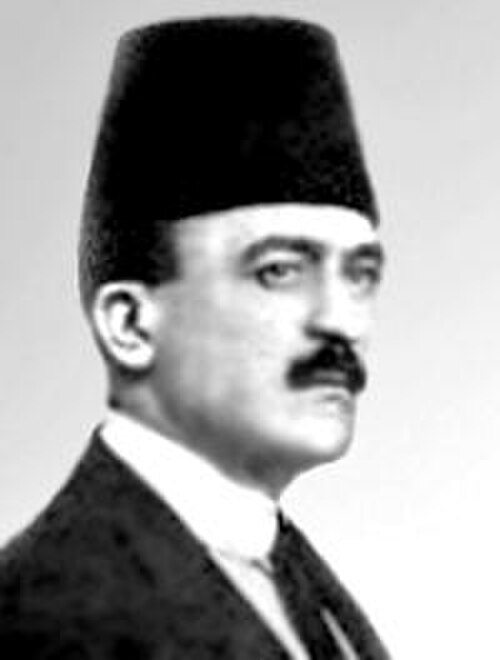
Khalil al-Sakakini
خليل السكاكيني
Born: Jerusalem, Ottoman Palestine
Domain: Academia & Thought
Recognition: Regionally recognized
Biography
Khalil al-Sakakini was born in Jerusalem in 1878 into a Palestinian Christian Orthodox family in the late Ottoman period. A teacher, scholar, poet, and Arab nationalist, he became one of the most important educators and intellectuals of Mandate-era Palestine, devoting his life to renewing Arab education and cultivating a modern national consciousness. In 1909 he founded the Dusturiyya (Constitutional) National School in Jerusalem, which became famous for its progressive pedagogy. Sakakini abolished grades, prizes, and corporal punishment, emphasized music, physical education, and the love of learning, and pioneered new methods for teaching Arabic, making it the language of instruction in place of Turkish. His educational philosophy was strikingly modern for its time and influenced teaching across the Arab world. Sakakini was also a social and religious reformer. He led a movement to Arabize and reform the Greek Orthodox Church of Jerusalem, which he regarded as corrupt and dominated by a Greek hierarchy, and his 1913 pamphlet The Orthodox Renaissance in Palestine led to his excommunication. Throughout his career he used education as a means of resisting both Ottoman and later British imperial authority, fostering anti-colonial and national awareness among teachers and students. He is perhaps best remembered today for his diaries, kept over decades and published in multiple volumes, which constitute one of the richest first-person records of Palestinian society, intellectual life, and the upheavals of the late Ottoman and Mandate periods. They offer an intimate chronicle of a vanishing world, culminating in his exile from his Qatamon home in Jerusalem in 1948. Driven from his home in the Nakba, Sakakini died in exile in 1953. His pedagogical innovations, his reformist writings, and above all his diaries have made him a foundational figure in Palestinian cultural memory; the Khalil Sakakini Cultural Centre in Ramallah, named in his honor, continues to anchor Palestinian intellectual and artistic life.
Why This Person Matters
A pioneering Palestinian educator who modernized Arab schooling and whose decades-long diaries are among the richest records of late-Ottoman and Mandate Palestinian life.
Historical Context
Sakakini came of age in late-Ottoman Jerusalem, when Arab intellectuals were beginning to assert a modern national and cultural identity against both Ottoman centralization and the rising tide of Zionist settlement. His pioneering school and educational reforms unfolded amid the transition from Ottoman to British rule, and he used pedagogy as a tool of anti-colonial awakening throughout the Mandate. His campaign to Arabize the Greek Orthodox Church reflected the broader Arab cultural nationalism of his era. His life ended in the rupture of 1948, when he was driven from his home in the Jerusalem neighborhood of Qatamon during the Nakba and forced into exile.
Historical Context
- — Born in Jerusalem, Ottoman Palestine
- — The Nakba – Palestinian catastrophe and mass displacement
- — Six-Day War and occupation of West Bank and Gaza
- — Passed away at age 75
Legacy & Influence
Sakakini's progressive pedagogy, abolishing grades and corporal punishment and making Arabic the language of instruction, influenced teaching across the Arab world and made him a foundational figure in modern Arab education. His Orthodox reform writings and his role in the Arab cultural renaissance left a lasting mark on Palestinian intellectual history. He is best remembered for his decades of diaries, among the richest first-person records of late-Ottoman and Mandate Palestinian life, which preserve a vanishing world. The Khalil Sakakini Cultural Centre in Ramallah, named in his honor, continues to anchor Palestinian intellectual and artistic life today.
Topics & Themes
- Ottoman Era
- Jerusalem
References & Sources
- Khalil Sakakini — https://en.wikipedia.org/wiki/Khalil_Sakakini
- Khalil al-Sakakini | Palquest — https://www.palquest.org/en/biography/14235/khalil-al-sakakini
- Khalil Sakakini | Jerusalem Story — https://www.jerusalemstory.com/en/bio/khalil-sakakini