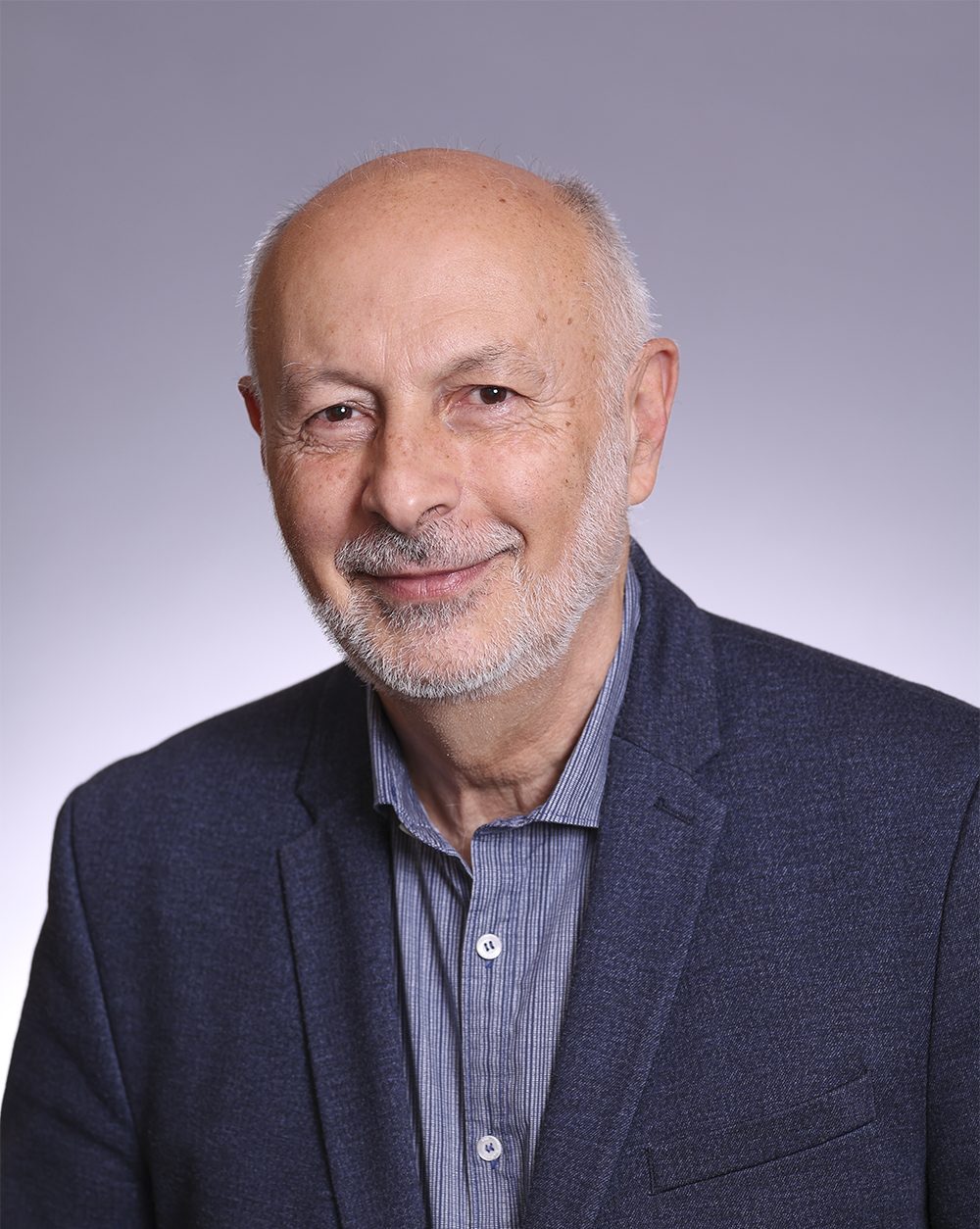
Yezid Sayigh
يزيد صايغ
Born: Beirut, Lebanon
Domain: Academia & Thought
Recognition: Globally recognized
Member of the Palestinian diaspora
Biography
Yezid Sayigh (born 1955) is a Palestinian political scientist and one of the foremost scholarly authorities on the Palestinian national movement, Arab civil-military relations, and the political economy of conflict and reconstruction in the Middle East. The son of the pioneering Palestinian development economist Yusif Sayigh, originally from the Galilee village of al-Bassa, and the British-born anthropologist and oral historian Rosemary Sayigh, he was raised in a diaspora household that placed Palestinian intellectual life at its center. He took a BSc in chemistry from the American University of Beirut before turning decisively to the study of war and politics, completing a PhD in War Studies at King's College London in 1987 with additional research at Tel Aviv University's Dayan Center. Sayigh's reputation rests above all on his monumental study Armed Struggle and the Search for a State: The Palestinian National Movement, 1949–1993 (Oxford University Press, 1997), a nearly thousand-page work widely regarded as the definitive history of the Palestine Liberation Organization and the institutions it built in exile. The book reframed the PLO not merely as a guerrilla movement but as an embryonic state-in-formation, tracing how the pursuit of armed struggle was bound up with the construction of bureaucratic, financial, and military institutions. It won critical acclaim and established him as a reference point for scholars, diplomats, and journalists alike. Beyond the academy, Sayigh occupied a rare position as both analyst and practitioner. He served as adviser, negotiator, and policy planner within the Palestinian delegation to the peace negotiations with Israel from 1991 to 2002, headed the Palestinian delegation to the Multilateral Working Group on Arms Control and Regional Security, and helped negotiate the 1994 Gaza–Jericho Agreement. He later advised on the reform of Palestinian public institutions until 2006, lending his scholarship on state-building a direct bearing on the actual machinery of Palestinian governance. His academic career has spanned leading institutions: a MacArthur Scholarship and research fellowship at St Antony's College, Oxford; assistant director of studies at the Centre of International Studies at Cambridge University from 1994 to 2003; head of the Middle East Research Programme at the International Institute for Strategic Studies in London from 1998 to 2003; and a professorship in Middle East studies in the Department of War Studies at King's College London. Since the late 2000s he has been a senior fellow at the Carnegie Middle East Center in Beirut. At Carnegie, Sayigh leads a program on civil-military relations in Arab states, producing influential analyses of the political and economic roles of Arab armed forces, the militarization of Egypt's economy, the dynamics of the Syrian conflict, and the fate of security-sector reform across the Arab uprisings. A frequent commentator in international media and a prolific essayist, he remains, in his early seventies, one of the most cited and consequential analysts of Arab politics and the unresolved question of Palestinian statehood.
Why This Person Matters
He wrote the definitive history of the PLO and stands as one of the world's leading analysts of Palestinian state-building and Arab civil-military relations.
Historical Context
Yezid Sayigh belongs to the generation of Palestinian intellectuals born into the diaspora created by the 1948 Nakba, which uprooted his father's family from the Galilee village of al-Bassa. Raised in Beirut amid the vibrant exile culture that made Lebanon a hub of Palestinian political and intellectual life, he came of age as the PLO transformed from a scattered refugee cause into an organized national movement. His scholarship and his direct participation in the Oslo-era negotiations situate him at the heart of the central Palestinian dilemma of the late twentieth century: the attempt to convert decades of armed struggle and exile into the institutions of a sovereign state.
Historical Context
- — Born in Beirut, Lebanon
- — Six-Day War and occupation of West Bank and Gaza
Legacy & Influence
Armed Struggle and the Search for a State remains the indispensable reference on the institutional history of the Palestinian national movement, shaping how scholars, diplomats, and a generation of students understand the PLO. Sayigh's later body of work at Carnegie redefined the comparative study of Arab armies and their grip on economies and politics, making him one of the most cited analysts of the post-2011 Arab order. His rare dual standing as both rigorous historian and former negotiator lends his analyses unusual authority across academia, policy circles, and international media.
Topics & Themes
- Nakba Generation
- Diaspora
References & Sources
- Yezid Sayigh — Wikipedia — https://en.wikipedia.org/wiki/Yezid_Sayigh
- Yezid Sayigh — Carnegie Endowment for International Peace — https://carnegieendowment.org/middle-east/people/yezid-sayigh
- Armed Struggle and the Search for State — Oxford University Press — https://global.oup.com/academic/product/armed-struggle-and-the-search-for-state-9780198296430