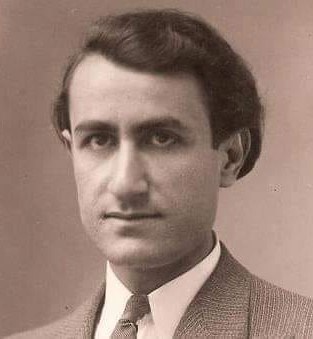
Salvador Arnita
سلفادور عرنيطة
Born: Jerusalem, Ottoman Palestine
Domain: Music
Recognition: Regionally recognized
Member of the Palestinian diaspora
Biography
Salvador Arnita, born in Jerusalem on 4 March 1914, was a pioneer of the classical-music renaissance in Palestine and one of its most accomplished composers and organists. A student of Augustin Lama, he continued his training in Italy, where he immersed himself in the European conservatory tradition before returning to put his learning at the service of musical life in Mandate-era Jerusalem. In the decades before the Nakba, Arnita was instrumental in promoting classical music in Palestine, a genre whose audience was then small. He performed as an organist, composed sacred and secular works, and helped cultivate an appreciation for the Western art-music tradition among Palestinian audiences, while remaining rooted in his own heritage. He became associated with the cultural and educational institutions of Jerusalem that nurtured a generation of Arab musicians. The catastrophe of 1948 uprooted Arnita, as it did so much of Palestinian cultural life. Like many of his compatriots he continued his career in exile, carrying the Palestinian classical tradition into the wider Arab world and lending his expertise to musical education and performance abroad. His displacement embodied the rupture that the Nakba inflicted on a flourishing artistic milieu. Arnita's wife, the musicologist and educator Yusra Jawhariyyeh Arnita, was herself a major figure in documenting Palestinian folk music, and together the couple represented a powerful current of Palestinian musical scholarship and performance that spanned both art and folk traditions. He died in 1984. Today he is remembered in encyclopedias of the Palestine question and in histories of Arab classical music as a founding figure who, alongside Yousef Khasho, carried forward the tradition begun by Lama. His life testifies to the depth and sophistication of pre-Nakba Palestinian high culture and to the resilience of that culture in exile.
Why This Person Matters
A founding composer and organist of the Palestinian classical renaissance whose career, severed by the Nakba, embodies both the sophistication of pre-1948 Palestinian high culture and its survival in exile.
Historical Context
Salvador Arnita was born in Jerusalem in 1914 into the cultivated Christian Arab world of British Mandate Palestine, where a student of Augustin Lama could go on to refine his craft in the conservatories of Italy. He returned to a Jerusalem with a small but ambitious classical-music scene, performing as an organist and composing for audiences his generation was still building. The Nakba of 1948 cut this trajectory in two, uprooting him along with the cultural institutions that had sustained him and forcing him to continue his career in exile across the Arab world. His life thus traces the arc from the flourishing high culture of Mandate Jerusalem to its violent dispersal.
Historical Context
- — Born in Jerusalem, Ottoman Palestine
- — The Nakba – Palestinian catastrophe and mass displacement
- — Six-Day War and occupation of West Bank and Gaza
- — Passed away
Selected Works
- Operatic and Choral Works — A pioneering Palestinian classical composer and conductor who founded and led choral societies in Palestine and Lebanon, producing original compositions that blended Arabic and Western classical influences.
Legacy & Influence
Arnita is remembered in encyclopedias of the Palestine question and histories of Arab classical music as a founding figure who, alongside Yousef Khasho, carried forward the tradition begun by Lama. His displacement made him a vessel of cultural transmission, bringing Palestinian classical practice into musical education and performance abroad and proving the resilience of that heritage in exile. Together with his wife, the musicologist Yusra Jawhariyyeh Arnita, who documented Palestinian folk music, he formed half of a couple that spanned both art and folk traditions of Palestinian music. His life endures as testimony to the depth of pre-Nakba Palestinian high culture and its survival after the catastrophe.
Topics & Themes
- Ottoman Era
- Diaspora
- Jerusalem
References & Sources
- Salvador 'Arnita — https://www.jerusalemstory.com/en/bio/salvador-arnita
- Palestinian Music — Interactive Encyclopedia of the Palestine Question — https://www.palquest.org/en/highlight/10526/palestinian-music