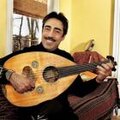
Simon Shaheen
سيمون شاهين
Born: Tarshiha, Israel
Domain: Music
Recognition: Globally recognized
Member of the Palestinian diaspora
Biography
Simon Shaheen, born in 1955 in the Galilean village of Tarshiha, is among the most accomplished oud and violin virtuosos and composers in the modern Arab musical world. He was raised in a profoundly musical Palestinian household: his father, Hikmat Shaheen, was a celebrated music teacher, composer, and master oud player, and several of Simon's siblings became performers and instrument makers. The family moved to Haifa when Simon was two, though he spent weekends back in Tarshiha. He took up the oud at age four under his father's tutelage and gave his first public improvisation by the age of six, soon adding the Western violin to his command of the Arab maqam tradition. Shaheen pursued formal training in both Arab and Western music, studying performance and Arabic literature in Jerusalem and later furthering his education in the United States at the Manhattan School of Music and Columbia University after emigrating in 1980. In New York he built an extraordinary career bridging two musical worlds. In 1982 he founded the Near Eastern Music Ensemble to perform classical Arabic repertoire at the highest standard, and he later created Qantara, an ensemble fusing Arab classical music with jazz, Latin American, and Western idioms. His concert credits span Carnegie Hall, the Kennedy Center, Cairo's Opera House, and major stages across Europe and the Arab world. His recorded body of work anchors his reputation as both preservationist and innovator. Albums such as Turath (Heritage), the landmark Taqasim: The Art of Improvisation in Arabic Music, his celebrated interpretations of the music of Mohammed Abdel Wahab, the cross-cultural Saltanah with Indian slide-guitarist Vishwa Mohan Bhatt, and the genre-blending Blue Flame (2001) demonstrate a rare command of taqsim, composition, and ensemble leadership. He has collaborated with figures as varied as Bill Laswell, Henry Threadgill, and the Klezmatics. In 1994 Shaheen received the National Heritage Fellowship from the National Endowment for the Arts, the highest honor the United States bestows on traditional artists. That same year he launched Mahrajan al-Fan, an annual Arab arts festival in New York, and he has long directed the Arabic Music Retreat at Mount Holyoke College, an intensive training program that has shaped a generation of musicians and scholars of Arab music in the West. Now based in New York and a U.S. citizen, Shaheen continues to perform, compose, record, and teach into his later career. He is widely regarded as a foremost ambassador of Arab music abroad, credited not only with developing new repertoire for the oud but with reshaping American perceptions of Arabic musical art.
Why This Person Matters
He is the foremost global ambassador of Arab classical music, an oud and violin virtuoso who both preserved the maqam tradition and reinvented it for international audiences.
Historical Context
Shaheen was born in 1955 in Tarshiha, a Galilean village that survived the 1948 Nakba within the boundaries of the new state of Israel, making him a member of the Palestinian community that remained in their homeland under Israeli rule. Coming of age as a Palestinian Arab inside Israel, he carried the cultural heritage of a people fragmented by displacement, and in 1980 he joined the wider Palestinian and Arab diaspora by emigrating to the United States, where he built his life and citizenship while keeping Arab musical identity at the center of his work.
Historical Context
- — Born in Tarshiha, Israel
- — Six-Day War and occupation of West Bank and Gaza
Selected Works
- Turath — A landmark 1992 album pairing Shaheen's oud and violin mastery with Western chamber musicians, bridging Arabic and Western classical traditions and bringing Palestinian musical heritage to international concert halls.
Legacy & Influence
Through decades of recordings, his ensembles, the Arabic Music Retreat at Mount Holyoke, and the Mahrajan al-Fan festival, Shaheen has trained and inspired a generation of Arab and Western musicians and decisively elevated the standing of Arab classical music in the global concert world. His fusion projects and his rigorous preservation of the maqam tradition together made him a model for cross-cultural artistry, and his National Heritage Fellowship cemented his role as the leading custodian and innovator of Arab music in the diaspora.
Topics & Themes
- Nakba Generation
- Diaspora
References & Sources
- Simon Shaheen — Wikipedia — https://en.wikipedia.org/wiki/Simon_Shaheen
- Simon Shaheen — National Endowment for the Arts — https://www.arts.gov/honors/heritage/simon-shaheen
- Shaheen, Simon (1955–) — Encyclopedia.com — https://www.encyclopedia.com/international/encyclopedias-almanacs-transcripts-and-maps/shaheen-simon-1955