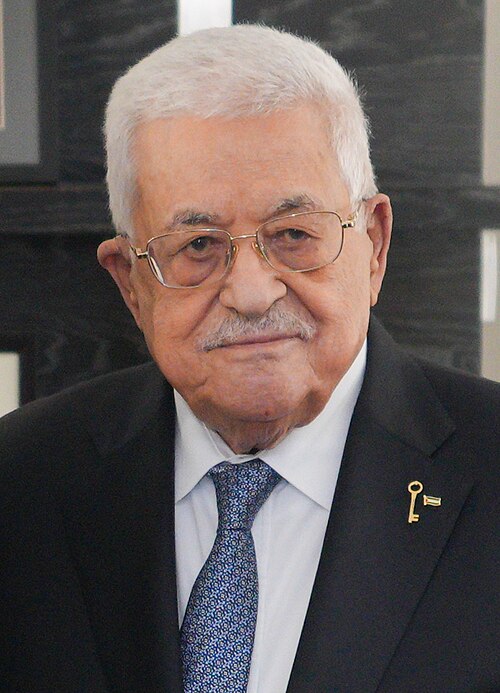
Mahmoud Abbas
محمود عباس
Born: Safed, Mandatory Palestine
Domain: Politics & Diplomacy
Recognition: Globally recognized
Biography
Mahmoud Rida Abbas, widely known by his kunya Abu Mazen, is a Palestinian statesman who has served as president of the Palestinian Authority and the State of Palestine since 2005 and as chairman of the Palestine Liberation Organization since 2004. Born in 1935 in Safed in the Galilee, he and his family fled to Syria during the 1948 Arab-Israeli War, an experience that shaped his lifelong identification with the Palestinian refugee question. Abbas earned a law degree from Damascus University and later a doctorate from a Moscow institute, and he was among the earliest members of Fatah, joining the movement's founding circle in the late 1950s and early 1960s. Within the PLO he built a reputation as a patient organizer and diplomat rather than a battlefield commander, cultivating contacts with Israeli peace advocates decades before official negotiations and becoming a principal architect of the secret talks that produced the 1993 Oslo Accords. He served briefly as the first prime minister of the Palestinian Authority in 2003, a post created under international pressure to reform Palestinian governance, before resigning amid friction with Arafat. After Arafat's death in 2004 he assumed the chairmanship of the PLO and won the 2005 presidential election, committing his leadership to negotiated statehood and opposition to armed intifada. Abbas's tenure has been defined by the pursuit of international recognition, most notably the 2012 United Nations General Assembly vote upgrading Palestine to non-member observer state status, and by his consistent rejection of violence as a strategy. It has also been marked by the deep political schism with Hamas following its 2007 takeover of Gaza, the indefinite postponement of elections, and growing domestic criticism of authoritarianism and the stalled peace process. Now one of the longest-serving leaders in the Arab world, Abbas remains the internationally recognized head of the Palestinian polity and the symbol of the diplomatic, two-state path. His legacy is contested: admirers credit him with keeping Palestinian statehood alive as a diplomatic project, while critics point to a frozen peace process, diminished legitimacy, and an unresolved succession question.
Why This Person Matters
Abbas is the internationally recognized leader who has anchored the Palestinian cause to the diplomatic, two-state path and secured Palestine's upgrade to UN observer state status.
Historical Context
Abbas was a child of Safed in the Galilee when his family fled to Syria in 1948, and that refugee experience steered him toward the diplomacy of return rather than the gun. Among Fatah's earliest members, he spent the years of armed struggle building quiet channels to Israeli interlocutors, work that made him a principal architect of the secret Oslo talks at the very moment the First Intifada had forced the question of Palestinian statehood. He rose to the presidency after Arafat's death in 2004, inheriting a movement fractured by the Second Intifada and, within three years, split territorially by Hamas's 2007 seizure of Gaza. His long tenure has unfolded against a frozen peace process, expanding settlements, and the steady erosion of the two-state horizon he staked his career on.
Historical Context
- — Born in Safed, Mandatory Palestine
- — The Nakba – Palestinian catastrophe and mass displacement
- — Six-Day War and occupation of West Bank and Gaza
Legacy & Influence
Abbas's signal achievement is the 2012 United Nations vote upgrading Palestine to non-member observer state status, anchoring the cause to international law and the diplomatic arena. He kept the PLO committed to negotiation and nonviolence as a strategic doctrine, preserving Palestinian statehood as a recognized diplomatic project even amid collapse. Yet his legacy is fiercely contested: indefinitely postponed elections, accusations of authoritarian drift, and an unresolved succession have eroded his domestic legitimacy. He will be remembered as the leader who held the diplomatic line while the ground for it disappeared, and whose long rule left the question of who follows him dangerously open.
Topics & Themes
- British Mandate
References & Sources
- Mahmoud Abbas | Biography & Facts — https://www.britannica.com/biography/Mahmoud-Abbas
- Mahmoud Abbas - Wikipedia — https://en.wikipedia.org/wiki/Mahmoud_Abbas
- Who is Mahmoud Abbas, Palestinian Authority president — https://www.middleeasteye.net/explainer-who-mahmoud-abbas-profile-palestine-authority