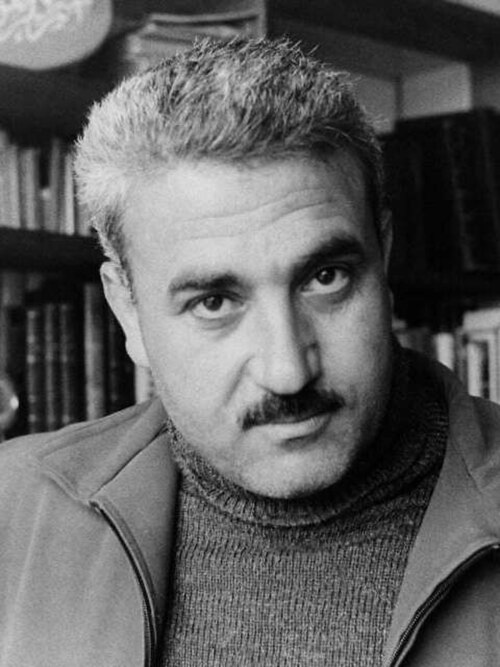
George Habash
جورج حبش
Born: Lydda, Mandatory Palestine
Domain: Politics & Diplomacy
Recognition: Globally recognized
Member of the Palestinian diaspora
Biography
George Habash, known by his nom de guerre al-Hakim (the doctor), was the founder and longtime leader of the Popular Front for the Liberation of Palestine (PFLP) and the principal architect of the Marxist-revolutionary wing of the Palestinian movement. Born in Lydda in 1926 into a Greek Orthodox Christian family, he was studying medicine at the American University of Beirut in 1948 when his hometown's population, including his family, was expelled in the Lydda exodus, an event that radicalized him and shaped his lifelong politics. After graduating at the top of his medical class, Habash worked in Palestinian refugee camps and co-founded the pan-Arab Arab Nationalist Movement, which sought Palestinian liberation through broader Arab unity. After the Arab defeat of 1967 discredited that vision, he founded the PFLP in December 1967, fusing Palestinian nationalism with Marxist-Leninist ideology and positioning the Front as the principal leftist rival to Arafat's Fatah within the PLO. Under Habash the PFLP pioneered the strategy of internationalizing the Palestinian struggle through dramatic, high-profile operations, most notoriously the wave of airliner hijackings that culminated in the 1970 Dawson's Field hijackings, which precipitated the Black September confrontation between the PLO and Jordan. These tactics brought the Palestinian cause unprecedented global attention while drawing fierce condemnation and reshaping the era's understanding of political violence. Ideologically, Habash insisted that Palestinian liberation was inseparable from a wider revolutionary transformation of the Arab world and opposition to imperialism, and he became a consistent leftist critic of Arafat's diplomatic accommodations, rejecting the Oslo Accords as a betrayal of Palestinian rights. He led the PFLP until ill health forced his resignation in 2000, and he died in Amman in 2008. Habash remains one of the most influential figures of the Palestinian and broader Arab left, the embodiment of the secular, revolutionary, and rejectionist alternative to the mainstream nationalist leadership. His PFLP shaped the strategy, iconography, and ideological debates of the Palestinian movement for decades.
Why This Person Matters
Habash founded the PFLP and led the Marxist-revolutionary wing of Palestinian nationalism, pioneering the strategy that thrust the Palestinian cause onto the global stage.
Historical Context
Habash was a medical student at the American University of Beirut in 1948 when his hometown of Lydda was emptied and his family expelled in the Lydda exodus, a trauma that turned a Greek Orthodox doctor into a revolutionary. He first pursued liberation through pan-Arabism, but the crushing Arab defeat of 1967 discredited that path and led him to found the PFLP that December, fusing Palestinian nationalism with Marxism-Leninism. His Front pioneered the internationalization of the struggle through the airliner hijackings that culminated in the 1970 Dawson's Field operations and triggered Black September. As Arafat moved toward diplomacy, Habash held the rejectionist line, condemning Oslo as a betrayal until ill health ended his leadership in 2000.
Historical Context
- — Born in Lydda, Mandatory Palestine
- — The Nakba – Palestinian catastrophe and mass displacement
- — Six-Day War and occupation of West Bank and Gaza
- — Passed away at age 81
Legacy & Influence
Habash, known as al-Hakim, remains the towering figure of the Palestinian and broader Arab left, the embodiment of a secular, revolutionary, and rejectionist alternative to the mainstream nationalist leadership. The PFLP he founded shaped the strategy, iconography, and ideological debates of the movement for decades and survives as the second-largest faction in the PLO. His insistence that Palestinian liberation was inseparable from a wider anti-imperialist transformation continues to define the Palestinian left's worldview. He is invoked by leftists across the Arab world as the conscience of the revolutionary tradition, and his rejection of Oslo still anchors the case of those who view it as a historic surrender.
Topics & Themes
- British Mandate
- Diaspora
References & Sources
- George Habash | Arab Nationalist, Guerrilla Leader, Founder — https://www.britannica.com/biography/George-Habash
- George Habash - Wikipedia — https://en.wikipedia.org/wiki/George_Habash
- George Habash (1925-2008) - Institute for Palestine Studies — https://www.palestine-studies.org/en/node/1650942