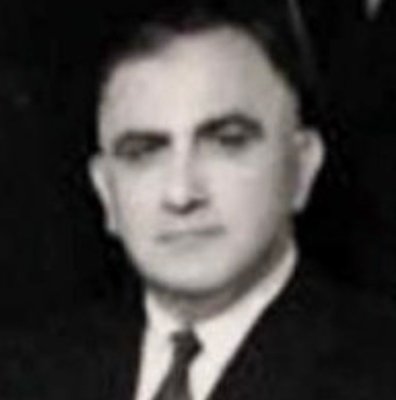
Augustin Lama
أوغسطين لاما
Born: Ramla, Ottoman Palestine
Domain: Music
Recognition: Regionally recognized
Biography
Augustin Lama, born in Ramla in 1902 during the late Ottoman period, is widely regarded as the grandfather of modern Palestinian art music. Trained from childhood under Franciscan monks in the Holy Land, he absorbed the rigorous traditions of Western classical composition, organ performance, and choral writing at a time when such formal training was rare among Arabs in Palestine. He went on to become the chief organist of the Catholic churches across the Holy Land, a position that placed him at the center of Jerusalem's rich sacred-music life. Lama's significance lies less in fame than in lineage. As one of the first Palestinians to master European art music and then teach it systematically to his compatriots, he effectively founded a school of Palestinian composition. His pupils included Salvador Arnita and Yousef Khasho, who would become the two towering figures of mid-twentieth-century Palestinian classical music. Through them, Lama's influence radiated across generations. His own output was devoted largely to sacred music: masses, motets, hymns, and organ works composed for liturgical use in the churches of Jerusalem and Bethlehem. Working within the framework of the Franciscan Custody of the Holy Land, he became part of a tradition of musical diplomacy in which European-trained Arab musicians mediated between local and Western musical worlds in Mandate-era Jerusalem. Lama's career bridged the Ottoman, British Mandate, and post-Nakba eras, making him a living thread through the most turbulent decades of modern Palestinian history. The displacement of 1948 scattered the cultural institutions he had helped build, yet his pedagogical legacy survived in the students he had trained. Though little of his music is widely performed today and few recordings circulate, scholars and encyclopedias of Palestinian culture consistently identify him as the foundational figure of the country's classical-music renaissance. He died in 1988, having seen the tradition he planted take root in subsequent generations of Palestinian composers. His story illustrates how, even before statehood and amid colonial rule, Palestinians built sophisticated cultural institutions and produced world-class musicians whose work formed the bedrock of a national artistic identity.
Why This Person Matters
He is the foundational figure of modern Palestinian art music, the teacher whose students built the country's classical tradition and whose career bridged the Ottoman, Mandate, and post-Nakba eras.
Historical Context
Born in Jerusalem in 1901, Augustin Lama was a child of late Ottoman Palestine, trained by Franciscan monks at a moment when formal Western musical education was almost unheard of among Arabs in Palestine. His maturity coincided with the British Mandate, when Jerusalem's churches, schools, and cultural institutions flourished and a small Arab elite engaged seriously with European art forms. As chief organist for the Catholic churches of the Holy Land, he sat at the heart of a sacred-music culture that mediated between local and European worlds. His long life carried him through the Ottoman collapse, the Mandate, and the rupture of 1948, which scattered the very cultural milieu in which he had worked.
Historical Context
- — Born in Ramla, Ottoman Palestine
- — The Nakba – Palestinian catastrophe and mass displacement
- — Six-Day War and occupation of West Bank and Gaza
- — Passed away
Selected Works
- Sacred Operatic Repertoire — An operatic tenor from Bethlehem who performed to critical acclaim in Egypt and the Arab world in the early 20th century, one of the first Palestinians to achieve renown in European classical singing.
Legacy & Influence
Lama's enduring legacy is one of lineage rather than fame: he founded, in effect, a school of Palestinian art-music composition by being among the first Palestinians to master European music and teach it systematically. His pupils Salvador Arnita and Yousef Khasho became the two towering figures of mid-century Palestinian classical music, so that his influence radiated forward through generations of composers. Though few of his sacred works — masses, motets, hymns, and organ pieces — are performed today and recordings are scarce, encyclopedias of Palestinian culture consistently name him the grandfather of the country's classical tradition. He stands as proof that, even under colonial rule and before statehood, Palestinians built sophisticated cultural institutions and produced world-class musicians.
Topics & Themes
- Ottoman Era
References & Sources
- Augustine Lama, World-Class Composer and Organist — https://www.jerusalemstory.com/en/bio/augustine-lama
- Music of Palestine — https://en.wikipedia.org/wiki/Music_of_Palestine
- Palestinian Music — Interactive Encyclopedia of the Palestine Question — https://www.palquest.org/en/highlight/10526/palestinian-music