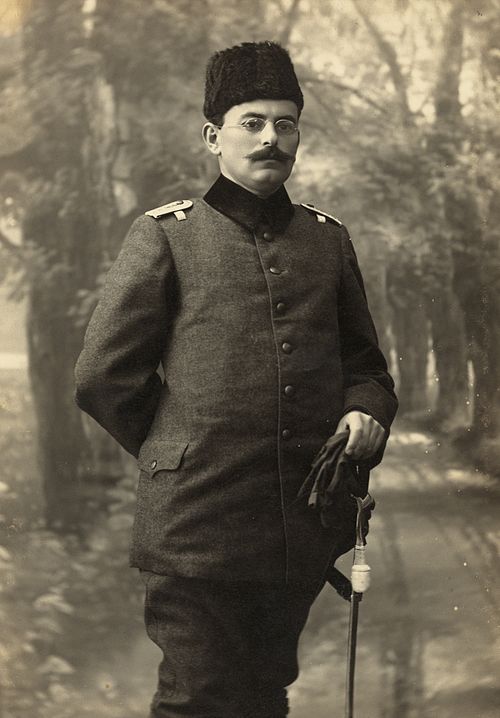
Tawfiq Canaan
توفيق كنعان
Born: Beit Jala, Ottoman Palestine
Domain: Science & Medicine
Recognition: Regionally recognized
Biography
Tawfiq Canaan was a pioneering Palestinian physician, medical researcher, and ethnographer whose career bridged the Ottoman and British Mandate eras. Born on 24 September 1882 in Beit Jala to a Lutheran pastor's family, he trained in medicine at the Syrian Protestant College (later the American University of Beirut), graduating in 1905, and went on to become one of the most respected doctors in Palestine. As a clinician and scientist, Canaan authored more than thirty-seven medical studies on tropical medicine, bacteriology, malaria, tuberculosis, and leprosy, contributing to research that advanced the treatment of these diseases in the region. He served as a medical officer in the Ottoman army during World War I and directed several Jerusalem-area hospitals across decades of turbulent political change, including leprosy hospitals where he devoted particular attention to a disease then heavily stigmatized. In 1944 he was elected the first president of the Palestine Arab Medical Association, a milestone in the professionalization of Arab medicine in the country. He combined this institutional leadership with a lifelong commitment to public health and to the dignity of his patients during a period when modern medical services in Palestine were still being built. Canaan is equally celebrated as an ethnographer. He assembled a renowned collection of more than 1,400 amulets and talismanic objects and produced groundbreaking studies of Palestinian folk medicine, popular religion, and rural customs, work driven in part by a conviction that the traditional culture of the Palestinian peasantry deserved scholarly preservation. His writings remain primary sources for the study of pre-Nakba Palestinian society. A committed nationalist, Canaan continued to serve as a physician through the upheaval of 1948 and after, dying in Jerusalem in 1964. He is remembered as a rare figure who united rigorous scientific medicine with a profound ethnographic defense of Palestinian heritage.
Why This Person Matters
A founding figure of modern Palestinian medicine and its first national medical leader, Canaan was also the great ethnographer who preserved the folk culture of pre-Nakba Palestine.
Historical Context
Canaan came of age in late Ottoman Palestine and built his medical career across the seismic transition to British rule after 1917. Trained in Beirut and shaped by the German Lutheran institutions of Jerusalem, he served as an Ottoman army medical officer in the First World War and then directed hospitals through the upheavals of the Mandate, including the disease epidemics and political violence of the 1920s and 1930s. His ethnographic salvage work was driven by an acute sense that the world of the Palestinian fellah was being eroded by modernization and political rupture, and he witnessed the catastrophe of 1948 firsthand in Jerusalem. The Nakba scattered the very peasant communities whose amulets, shrines, and folk remedies he had spent decades documenting.
Historical Context
- — Born in Beit Jala, Ottoman Palestine
- — The Nakba – Palestinian catastrophe and mass displacement
- — Six-Day War and occupation of West Bank and Gaza
- — Passed away at age 81
Legacy & Influence
Canaan is remembered as the father of modern Palestinian medicine and the first president of the Palestine Arab Medical Association, a foundational figure in professionalizing Arab healthcare in the country. His ethnographic studies of folk medicine, popular religion, and the saints' shrines of Palestine remain indispensable primary sources for scholars of pre-Nakba society, frequently cited in Palestinian studies. His collection of over 1,400 amulets and talismans, now associated with the Tawfiq Canaan Collection studied and exhibited at Birzeit University, preserves a material record of a vanished folk world. He stands as a rare model uniting rigorous science with the scholarly defense of Palestinian heritage.
Topics & Themes
- Ottoman Era
- West Bank
References & Sources
- Tawfiq Canaan — https://en.wikipedia.org/wiki/Tawfiq_Canaan
- Tawfiq Canaan - Jerusalem Story — https://www.jerusalemstory.com/en/bio/tawfiq-canaan
- Tawfik Canaan: His Life and Works — https://www.palestine-studies.org/en/node/78010