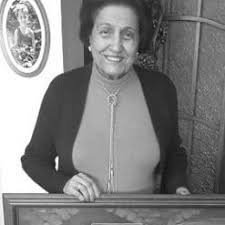
Tamam Al-Akhal
تمام الأكحل
Born: Jaffa, Mandatory Palestine
Domain: Visual Arts
Recognition: Regionally recognized
Member of the Palestinian diaspora
Biography
Tamam Al-Akhal (born 1935 in Jaffa) is one of the first formally trained Palestinian women artists and a foundational figure in the development of modern Palestinian art. In 1948, following the Nakba, she and her family were displaced to a refugee camp in Lebanon, an uprooting from her coastal hometown that would echo throughout her life's work in recurring imagery of the Mediterranean, Jaffa's markets, and traditional Palestinian architecture. She pursued formal training at the Egyptian School of Fine Arts in Cairo between 1953 and 1959, where she built lasting relationships with leading art teachers of the period. Her early style drew on realism and impressionism to depict refugee life and Palestinian landscapes, and over the decades her work evolved to engage historical trauma directly, as in 'The Massacre of Khan Younis,' and to absorb elements of surrealism and abstraction while remaining anchored in themes of memory, resistance, and cultural heritage. In 1959 she married the painter Ismail Shammout, and the two became the most prominent artistic couple in modern Palestinian art. Together they helped establish and lead the Arts and National Culture Division of the PLO, working not only as artists but as cultural organizers who built institutions for a dispersed people. Their late collaborative mural cycle, 'Palestine: The Exodus and the Odyssey,' stands as a monumental joint narration of Palestinian history. Al-Akhal has exhibited internationally across Egypt, Lebanon, Jordan, Jerusalem, the United States, England, China, Morocco, Berlin, Paris, Rome, and Vienna, building a reputation that extends well beyond the Arab world. As a pioneering woman in a field then dominated by men, she opened space for subsequent generations of Palestinian women artists. Now based in Amman, Al-Akhal has remained an active and revered voice in the Palestinian artistic community well into her later years. Her dual legacy, as a painter of refugee memory and as a builder of Palestinian cultural institutions, secures her place among the most significant figures of the Nakba generation.
Why This Person Matters
One of the first formally trained Palestinian women artists, Al-Akhal turned the memory of Jaffa and the refugee experience into enduring national imagery.
Historical Context
Born in Jaffa in 1935, Al-Akhal was a child of thirteen when the Nakba uprooted her family in 1948 and drove them to a refugee camp in Lebanon, severing her from the Mediterranean coastal city whose markets, sea, and architecture would recur throughout her art as the imagery of a lost home. She trained formally at the Egyptian School of Fine Arts in Cairo between 1953 and 1959, coming of age as an artist amid the cultural ferment of Nasser's Egypt and the consolidation of an Arab modernist art scene. Her marriage to Ismail Shammout in 1959 placed her at the center of the Palestinian national-cultural project just as the PLO was being formed. Across decades of exile she worked simultaneously as a painter of displacement and as a builder of institutions for a scattered people.
Historical Context
- — Born in Jaffa, Mandatory Palestine
- — The Nakba – Palestinian catastrophe and mass displacement
- — Six-Day War and occupation of West Bank and Gaza
- — Passed away
Selected Works
- Paintings of Palestinian Womanhood — As the wife and lifelong partner of Ismail Shammout, Al-Akhal's paintings — depicting Palestinian women in embroidered dress, domestic interiors, and landscapes — became a complementary archive of Palestinian identity alongside his work.
Legacy & Influence
Al-Akhal is honored as one of the first formally trained Palestinian women artists, who turned the memory of Jaffa and the refugee experience, in works such as 'The Massacre of Khan Younis,' into enduring national imagery and opened space for the generations of Palestinian women artists who followed. With Ismail Shammout she formed the most prominent artistic couple in modern Palestinian art, jointly leading the PLO's Arts and National Culture Division and co-creating the monumental mural cycle 'Palestine: The Exodus and the Odyssey.' She exhibited across the Arab world, Europe, the United States, and China, building a reputation well beyond the region. Active and revered in Amman into her final years before her death in 2024, she leaves a dual legacy as painter of refugee memory and builder of Palestinian cultural institutions.
Topics & Themes
- British Mandate
- Diaspora
References & Sources
- Tamam Al-Akhal - Wikipedia — https://en.wikipedia.org/wiki/Tamam_Al-Akhal
- Tamam Al-Akhal - AWARE Women Artists — https://awarewomenartists.com/en/artiste/tamam-al-akhal/
- Tamam al-Akhal - Mathaf Encyclopedia — https://mathaf.org.qa/en/encyclopedia/artists-biographies/tamam-al-akhal/