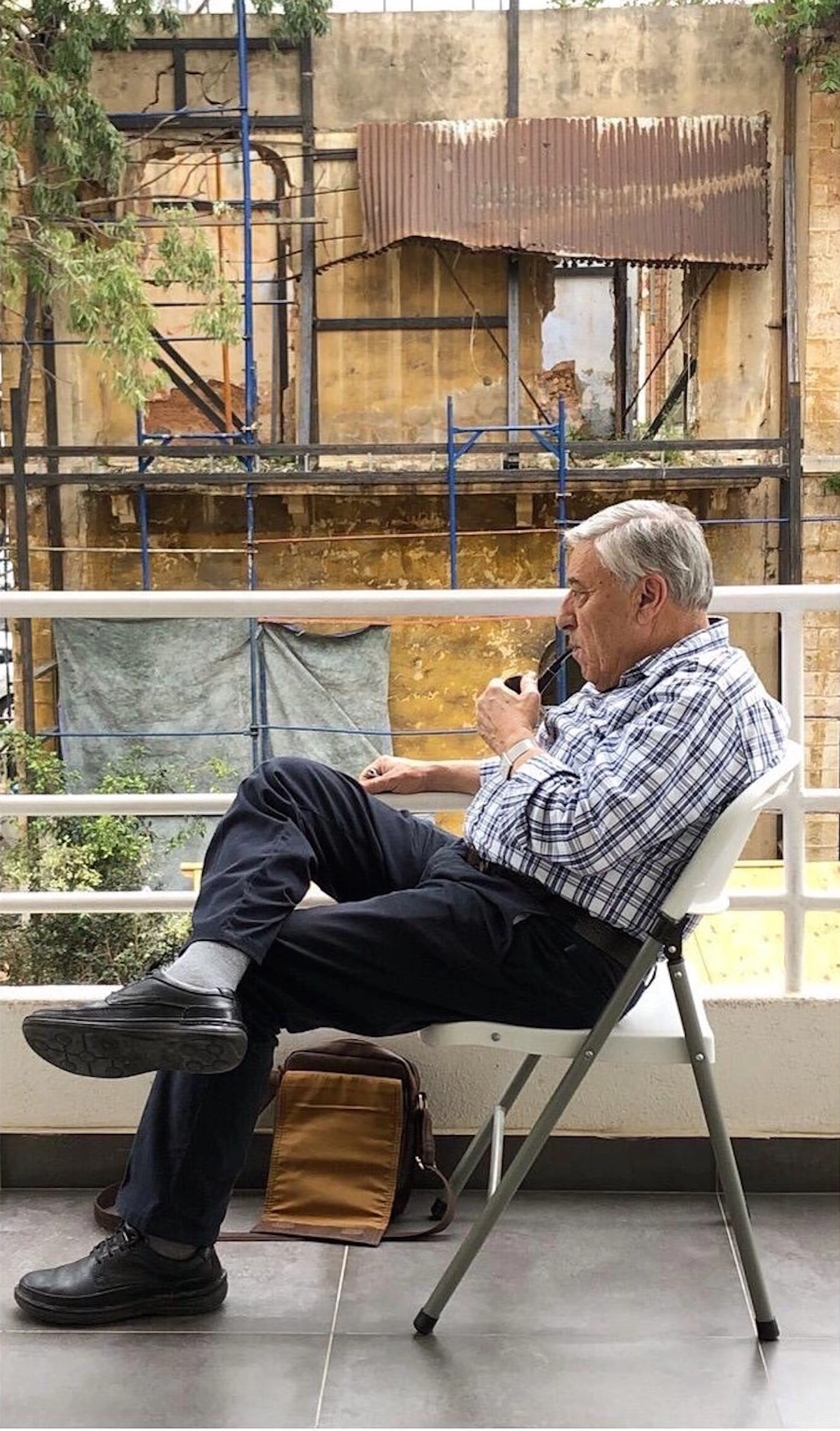
Nabil Anani
نبيل عناني
Born: Latroun, Mandatory Palestine
Domain: Visual Arts
Recognition: Regionally recognized
Biography
Nabil Anani (born 1943 in Latroun) is one of the key founders of the contemporary Palestinian art movement, a painter, sculptor, and ceramicist whose career has both produced a distinctive body of work and helped build the institutional foundations of art in Palestine. Displaced with his family to Halhul in the southern West Bank during the Nakba, he completed his early education there before studying at the Faculty of Fine Arts at Alexandria University, graduating in 1969. Returning to Palestine, Anani began his career as an artist and trainer at a UN college in Ramallah and held his first exhibition in Jerusalem in 1972. He has since exhibited widely across Europe, North America, the Middle East, North Africa, and Japan, developing a vivid visual vocabulary centered on the Palestinian landscape, village life, women, and the olive groves and terraced hills that anchor Palestinian attachment to the land. Anani is celebrated for his material experimentation. As a co-founder in 1987 of the New Visions group, alongside Sliman Mansour, Vera Tamari, and Tayseer Barakat, he pledged to abandon imported Israeli art supplies in favor of locally found materials. He discovered the expressive richness of sheepskins, leather, henna, natural dyes, and clay, integrating them into works that fused political resistance with a deep sensitivity to texture and craft. A tireless institution-builder, Anani co-founded the League of Palestinian Artists in 1973 and became its director in 1998, taught at Al-Quds University until 2003, and in 2006 helped establish the International Academy of Art in Ramallah, an effort to provide formal fine-art education within Palestine itself. In 1997 he received the first Palestinian National Prize for Visual Art from Yasser Arafat. Now regarded as an elder statesman of Palestinian art, Anani continues to paint richly colored, lyrical evocations of the homeland. His combined achievements, as artist, teacher, and founder of enduring institutions, make him one of the most consequential figures of his generation.
Why This Person Matters
A co-founder of the New Visions movement and builder of Palestine's art institutions, Anani pioneered the use of local materials as both aesthetic and act of resistance.
Historical Context
Born in Latroun in 1943, Anani was displaced with his family to Halhul in the southern West Bank during the Nakba, an early uprooting that bound his later art to the land and village life of Palestine. He studied at Alexandria University, graduating in 1969, and returned to a West Bank newly under Israeli occupation after 1967, beginning his career teaching at a UN college in Ramallah and exhibiting in Jerusalem in 1972. His material breakthrough came with the First Intifada: as a co-founder of the New Visions group in 1987, he pledged with his peers to abandon imported Israeli art supplies, discovering instead the expressive power of sheepskin, leather, henna, and clay. His career has thus mirrored the Palestinian drive to build an autonomous cultural life under and against occupation.
Historical Context
- — Born in Latroun, Mandatory Palestine
- — The Nakba – Palestinian catastrophe and mass displacement
- — Six-Day War and occupation of West Bank and Gaza
Selected Works
- Palestinian Landscape Paintings — Anani's celebrated paintings use natural Palestinian materials — henna, clay, leather, dried plants — to depict the land, embodying the idea that Palestinian art should grow from the soil itself rather than imported Western techniques.
Legacy & Influence
Anani is regarded today as an elder statesman of Palestinian art, celebrated both for a vivid body of work centered on the land, village life, women, and olive groves, and for his pioneering use of local materials as both aesthetic and political resistance. A tireless institution-builder, he co-founded the League of Palestinian Artists in 1973 and later directed it, helped found the New Visions group in 1987, and in 2006 co-established the International Academy of Art in Ramallah to provide formal fine-art education within Palestine itself. In 1997 he received the first Palestinian National Prize for Visual Art from Yasser Arafat. His combined achievements as artist, teacher, and founder of enduring institutions make him one of the most consequential figures of his generation, still painting lyrical evocations of the homeland.
Topics & Themes
- British Mandate
References & Sources
- Nabil Anani - Wikipedia — https://en.wikipedia.org/wiki/Nabil_Anani
- Nabil Anani - Dalloul Art Foundation — https://dafbeirut.org/artists/nabil-anani
- How Palestinian Artists Carry the New Visions Spirit — https://www.aljazeera.com/features/2025/11/16/how-palestinian-artists-carry-the-new-visions-spirit-of-resilience