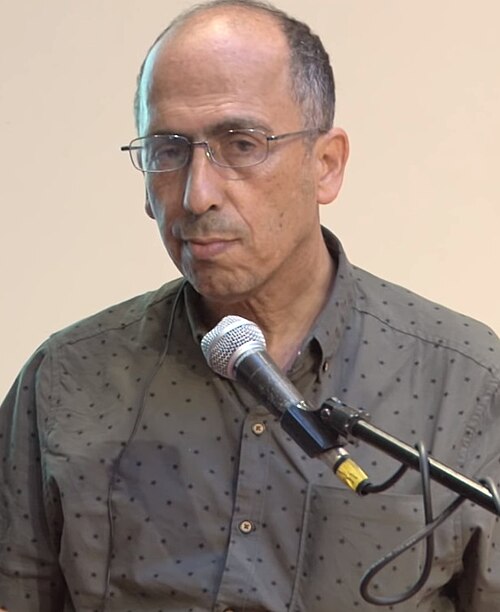
Mazin Qumsiyeh
مازن قمصية
Born: Beit Sahour, Jordanian-administered West Bank
Domain: Science & Medicine
Recognition: Regionally recognized
Biography
Mazin Qumsiyeh is a Palestinian geneticist, zoologist, and conservation biologist who built an internationally respected scientific career abroad before returning to Palestine to establish institutions of science and biodiversity. Born in 1957 in Beit Sahour, near Bethlehem, he earned a PhD in zoology and genetics from Texas Tech University in 1986 and completed a clinical cytogenetics fellowship. During his years in the United States, Qumsiyeh served on the faculties of the University of Tennessee, Duke University, and Yale University, directing cytogenetics laboratories and publishing prolifically in clinical genetics and mammalian biology. Over his career he has authored some 250 scientific papers and more than thirty book chapters, spanning genetics, biodiversity conservation, and the natural history of the region. Returning home, he became a professor of biology and genetics at Bethlehem University and Birzeit University and founded the Palestine Institute for Biodiversity and Sustainability and the Palestine Museum of Natural History. These institutions document and protect the flora and fauna of historic Palestine, train young scientists, and promote sustainable development, filling a critical gap in indigenous scientific infrastructure under occupation. Qumsiyeh is also a prominent author and public intellectual, writing widely read books on biodiversity, human rights, and nonviolent resistance, and his combination of rigorous science with civic engagement led to his nomination for the Nobel Peace Prize in 2025. As a scientist who chose to build research capacity within Palestine rather than remain in the diaspora, Qumsiyeh occupies a distinctive role: a bridge between world-class laboratory genetics and a homegrown movement to study, conserve, and celebrate the natural heritage of his homeland.
Why This Person Matters
A widely published geneticist who returned home to found Palestine's natural history museum and biodiversity institute, Qumsiyeh built indigenous scientific infrastructure under occupation.
Historical Context
Born in Beit Sahour near Bethlehem in 1957, a decade before the 1967 occupation of the West Bank, Qumsiyeh grew up in a town later famed for its civil resistance during the First Intifada. He built a distinguished scientific career in the United States across the 1980s and 1990s, then made the deliberate choice to return home and build institutions under occupation rather than remain in the comfortable diaspora. His homecoming work has unfolded amid the constraints of military control, land confiscation, and restricted movement that shape Palestinian academic life. His career joins world-class laboratory genetics to a homegrown movement of nonviolent resistance and indigenous science.
Historical Context
- — Born in Beit Sahour, Jordanian-administered West Bank
- — Six-Day War and occupation of West Bank and Gaza
Legacy & Influence
Qumsiyeh founded the Palestine Institute for Biodiversity and Sustainability and the Palestine Museum of Natural History, institutions that document and protect the flora and fauna of historic Palestine, train young scientists, and promote sustainable development. The author of some 250 scientific papers and influential books on biodiversity, human rights, and nonviolent resistance, he became a prominent public intellectual and was nominated for the Nobel Peace Prize in 2025. His decision to build indigenous research capacity inside Palestine, rather than from abroad, set an enduring example. He is remembered as a bridge between rigorous science and a movement to study, conserve, and celebrate Palestine's natural heritage.
Topics & Themes
- Nakba Generation
- West Bank
References & Sources
- Mazin Qumsiyeh — https://en.wikipedia.org/wiki/Mazin_Qumsiyeh
- Mazin Qumsiyeh, Ph.D. - Bethlehem University — https://www.bethlehem.edu/employees/mazin-qumsiyeh/
- Palestine Institute for Biodiversity and Sustainability — https://www.palestinenature.org/about-us/history/