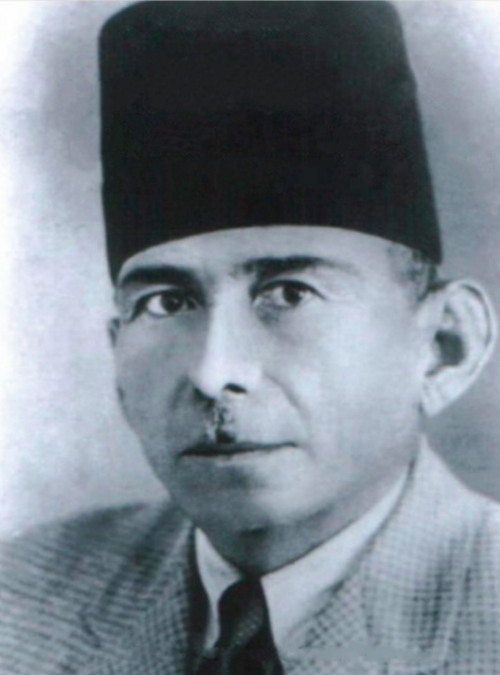
Issa El-Issa
عيسى العيسى
Born: Jaffa, Ottoman Palestine
Domain: Journalism & Media
Recognition: Regionally recognized
Biography
Issa Daoud El-Issa (1878-1950) was a Palestinian journalist, poet, and editor widely regarded as one of the founding fathers of modern Palestinian journalism. A graduate of the Syrian Protestant College (later the American University of Beirut), he returned to his native Jaffa where, with his cousin Yousef El-Issa, he founded the newspaper Falastin in 1911. The paper would become the most influential and longest-running Arabic daily in Ottoman and Mandate Palestine, and a defining instrument in the formation of a distinct Palestinian national consciousness. Falastin was remarkable for addressing its readers directly as 'Palestinians' from its earliest issues, helping to crystallize a territorial and civic identity at a moment when such categories were still fluid. Under El-Issa's editorship the paper became the country's fiercest and most consistent critic of Zionist settlement, warning against land sales and mobilizing Arab public opinion. It was also a vehicle for the Arab Orthodox movement, which El-Issa championed against Greek clerical control of the Jerusalem Orthodox Church. El-Issa's outspokenness made him a perennial target of authority. Falastin was suspended repeatedly by Ottoman and then British authorities, often following Zionist complaints, and El-Issa endured censorship, exile, and financial hardship to keep it alive. During the First World War the Ottomans shut the paper and exiled him to Anatolia; he revived it under the British Mandate, where it reached its peak circulation and influence. Beyond reporting, El-Issa was a literary stylist and satirist whose editorials and verse shaped Arabic political prose in Palestine. He cultivated a generation of journalists and made Falastin a training ground and a forum for the country's intellectual and political elite. The paper's coverage of the 1929 disturbances, the 1936-1939 revolt, and the deteriorating situation of the 1940s provides one of the richest documentary records of the Mandate period. The Nakba of 1948 ended the Jaffa paper; El-Issa fled to Beirut, where he died in 1950, having attempted to relaunch Falastin in exile. His legacy endures as the archetype of the committed Palestinian editor: a man who fused professional journalism with national advocacy and helped give a people both a daily voice and a name.
Why This Person Matters
Founder of Falastin, the newspaper that gave Palestinians a daily voice and helped name their national identity, he is the foundational figure of modern Palestinian journalism.
Historical Context
Issa El-Issa founded the newspaper Falastin in Jaffa in 1911, in the final decade of Ottoman rule, when the loosening of press controls after the 1908 Young Turk revolution allowed an Arab public sphere to flourish and the first stirrings of organized Zionist settlement were alarming Palestine's notables. From the outset his paper addressed its readers as 'Palestinians,' helping crystallize a territorial and civic identity at a moment when such categories were still fluid. The First World War saw the Ottomans shut the paper and exile him to Anatolia; he revived it under the British Mandate, where Falastin became the country's fiercest critic of Zionism and chronicled the 1929 disturbances, the 1936-1939 revolt, and the slide toward catastrophe. The Nakba of 1948 destroyed his Jaffa enterprise and drove him into exile in Beirut, where he died in 1950.
Historical Context
- — Born in Jaffa, Ottoman Palestine
- — The Nakba – Palestinian catastrophe and mass displacement
- — Six-Day War and occupation of West Bank and Gaza
- — Passed away at age 72
Legacy & Influence
El-Issa is remembered as a founding father of modern Palestinian journalism and the editor of Falastin, the most influential and longest-running Arabic daily of Ottoman and Mandate Palestine. His paper did more than report: by naming its readers Palestinians and championing the Arab Orthodox movement against Greek clerical control, it helped give a people both a daily voice and a sharpened sense of national identity. The Falastin archive he created remains one of the richest documentary records of the Mandate period, indispensable to historians of Palestine. As the archetype of the committed Palestinian editor, fusing professional journalism with national advocacy, he set the template that successors from Najib Nassar to the journalists of today have followed.
Topics & Themes
- Ottoman Era
References & Sources
- Issa El-Issa — https://en.wikipedia.org/wiki/Issa_El-Issa
- Isa al-Isa - Palquest — https://www.palquest.org/en/biography/9731/isa-al-isa
- Falastin (newspaper) — https://en.wikipedia.org/wiki/Falastin