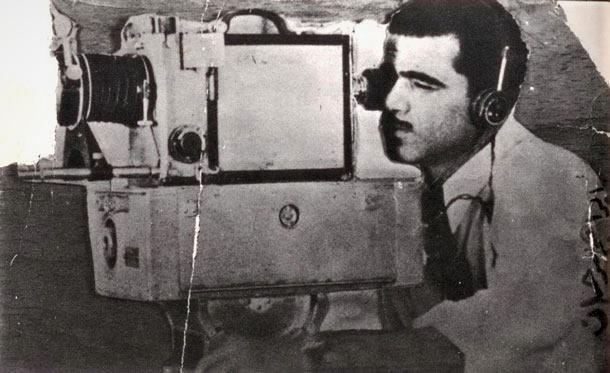
Ibrahim Hassan Sirhan
إبراهيم حسن سرحان
Born: Jaffa, Mandatory Palestine
Domain: Film & Television
Recognition: Locally recognized
Biography
Ibrahim Hassan Sirhan is widely regarded as the founding father of Palestinian cinema, the first Palestinian known to have shot, developed, and screened moving pictures. Working out of Jaffa during the British Mandate, he was entirely self-taught: he purchased a hand-cranked camera for fifty liras in Tel Aviv and learned the crafts of filming, developing, and editing from books and instructional manuals, reportedly even building his own editing table by hand. His earliest documented work, made around 1935, was a roughly twenty-minute silent film documenting the visit of King Abd al-Aziz Ibn Saud of Saudi Arabia to Palestine. Sirhan followed the royal entourage from Lod to Jaffa and on to Tel Aviv. He screened the film at the popular Nabi Rubin festival, accompanying it with a live soundtrack so that audiences, it is said, did not realize the picture was silent. This pioneering act planted the seeds of an indigenous Palestinian film practice decades before the term "Palestinian cinema" entered common use. In 1945 Sirhan partnered with Ahmad Hilmi al-Kilani to establish the Arab Film Company, an ambitious attempt to build a national film industry. The company produced the feature film "Holiday Eve" and began preparations for a second feature, "A Storm at Home." These efforts represented the first organized push toward narrative filmmaking by Palestinians on their own soil. The catastrophe of 1948 abruptly ended this nascent industry. When Jaffa was bombarded and fell, Sirhan was forced to flee, and his films and equipment were lost in the chaos of the Nakba. The near-total disappearance of this early body of work is itself emblematic of the rupture that the Nakba inflicted on Palestinian cultural life. Sirhan did not stop working. In exile he contributed to the production of the first Jordanian feature film, "The Struggle in Jarash" (1957), carrying his pioneering expertise into the wider Arab region. His career thus bridges the lost pre-Nakba Palestinian cinema and the dispersed, diasporic filmmaking that would follow. Though little of his work survives and even his biographical details remain partly uncertain, Sirhan occupies a foundational place in the historiography of Palestinian film. Every account of the cinema of Palestine begins with him, and his story has become a powerful symbol of both early Palestinian modernity and the cultural losses of dispossession.
Why This Person Matters
He shot and screened the first Palestinian films in the 1930s and 1940s, making him the foundational pioneer from whom the entire history of Palestinian cinema descends.
Historical Context
Ibrahim Hassan Sirhan worked out of Jaffa during the British Mandate, an era of rapid Palestinian urban modernity, when he taught himself filmmaking from books and a fifty-lira hand-cranked camera bought in Tel Aviv. His earliest documented film, made around 1935, recorded the visit of King Abd al-Aziz Ibn Saud to Palestine and was screened with a live soundtrack at the popular Nabi Rubin festival. In 1945 he and Ahmad Hilmi al-Kilani founded the Arab Film Company, the first organized push toward a Palestinian national film industry, producing the feature Holiday Eve. The catastrophe of 1948 shattered this nascent industry: when Jaffa was bombarded and fell, Sirhan fled and his films and equipment were lost, his story becoming emblematic of the cultural rupture of the Nakba.
Historical Context
- — Born in Jaffa, Mandatory Palestine
- — The Nakba – Palestinian catastrophe and mass displacement
- — Six-Day War and occupation of West Bank and Gaza
Selected Works
- Long Days (Ayyam Taweela) — One of the earliest Palestinian narrative feature films, this 1980 work depicts Palestinian life under occupation and is considered a foundational work of Palestinian cinema.
Legacy & Influence
Sirhan is enshrined as the founding father of Palestinian cinema, the first Palestinian known to have shot, developed and screened moving pictures, and every history of the cinema of Palestine begins with him. Though almost none of his work survives and even his biography remains partly uncertain, his pioneering act planted the seeds of an indigenous Palestinian film practice decades before the term entered common use. After the Nakba he carried his expertise into exile, contributing to the first Jordanian feature, The Struggle in Jarash (1957), and thereby bridging the lost pre-Nakba cinema and the diasporic filmmaking that followed. His story endures as a powerful symbol of both early Palestinian modernity and the irreplaceable cultural losses of dispossession.
Topics & Themes
- Ottoman Era
References & Sources
- Cinema of Palestine — https://en.wikipedia.org/wiki/Cinema_of_Palestine
- Ibrahim Hassan Sarhan – Faces of Palestine — https://www.facesofpalestine.org/profiles/ibrahim-hassan-sarhan
- A Chronicle of Palestinian Cinema — https://www.cambridge.org/core/books/abs/palestinian-cinema/chronicle-of-palestinian-cinema/5BD54268AFA03D24FD3BCF86B676A11D