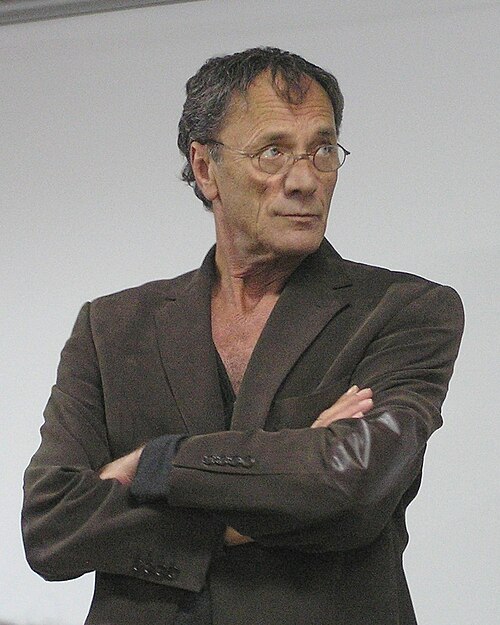
Mohammad Bakri
محمد بكري
Born: Bi'ina, Israel
Domain: Film & Television
Recognition: Regionally recognized
Biography
Mohammad Bakri is one of the most accomplished and politically significant Palestinian actors and filmmakers of his generation, the patriarch of a remarkable acting dynasty. Born in 1953 in the Galilee village of Bi'ina to a Palestinian family that became citizens of Israel, he studied Arabic literature and theatre at Tel Aviv University and built a career spanning stage, screen, and documentary directing. He made a striking film debut at thirty in Costa-Gavras's "Hanna K." (1983), playing a Palestinian refugee attempting to reclaim his family home. His role as a Palestinian prisoner in the Israeli film "Beyond the Walls" (1984) earned international acclaim and contributed to that film's Academy Award nomination. Over four decades he has appeared in dozens of films, becoming one of the most recognizable Palestinian faces in regional and international cinema. Bakri's most consequential and controversial work was as a documentary director. Following the Israeli military's Operation Defensive Shield in the Jenin refugee camp in April 2002, he gathered residents' testimonies into the film "Jenin, Jenin" (2002). The film circulated widely at Arab and international festivals, but it also embroiled Bakri in years of defamation litigation in Israeli courts, where it was eventually banned, making him a symbol of the struggle over Palestinian narrative and freedom of expression. As an actor he has continued to deliver memorable performances in landmark Palestinian films, including a celebrated turn opposite his son Saleh in Annemarie Jacir's "Wajib" (2017), in which father and son play an estranged pair delivering wedding invitations across Nazareth. The film's intimate father-son dynamic mirrored Bakri's own life and stands as one of the warmest works in the Palestinian canon. Bakri is also the founder of an extraordinary acting family: his sons Saleh, Adam, Ziad, and Mahmood Bakri have all become prominent actors, extending his influence across the contemporary Palestinian screen. Few individuals have shaped the on-screen representation of Palestinians as durably, both through their own performances and through the talent they nurtured. Bakri's career embodies the dual role of the Palestinian artist as both creator and witness, using performance and documentary alike to insist on the visibility of Palestinian life and memory. He remains a towering figure of Palestinian culture, revered across the Arab world and beyond.
Why This Person Matters
He is a defining Palestinian actor and the documentarian of "Jenin, Jenin," a witness-artist who fought for Palestinian narrative on screen and founded an entire acting dynasty.
Historical Context
Mohammad Bakri was born in 1953 in the Galilee village of Bi'ina to a Palestinian family that became citizens of Israel, and he studied Arabic literature and theatre at Tel Aviv University, building a career across the divides of stage and screen. He debuted internationally in Costa-Gavras's Hanna K. (1983) as a refugee seeking to reclaim his family home, and his role in Beyond the Walls (1984) contributed to that film's Oscar nomination. His most consequential work came after the Israeli army's Operation Defensive Shield in the Jenin refugee camp in April 2002, when he gathered residents' testimonies into the documentary Jenin, Jenin (2002). That film embroiled him in years of defamation litigation in Israeli courts and was eventually banned, making him a symbol of the struggle over Palestinian narrative and freedom of expression.
Historical Context
- — Born in Bi'ina, Israel
- — Six-Day War and occupation of West Bank and Gaza
- — Passed away at age 72
Selected Works
- Jenin, Jenin — Shot in the aftermath of the 2002 Israeli military operation in Jenin refugee camp, this documentary gathers testimonies of survivors from the rubble. One of the most controversial and widely watched Palestinian documentary films.
Legacy & Influence
Bakri's legacy is that of a witness-artist who used both performance and documentary to insist on the visibility of Palestinian life and memory, becoming one of the most recognizable Palestinian faces in regional and international cinema across four decades. Jenin, Jenin made him a lasting emblem of the fight for Palestinian narrative and free expression, while his celebrated later turn opposite his son Saleh in Annemarie Jacir's Wajib (2017) stands among the warmest works in the Palestinian canon. He is also the patriarch of an extraordinary acting dynasty, his sons Saleh, Adam, Ziad and Mahmood all becoming prominent actors who extend his influence across the contemporary Palestinian screen. Revered across the Arab world, he embodies the dual role of the Palestinian artist as both creator and witness.
Topics & Themes
- Nakba Generation
References & Sources
- Mohammad Bakri — https://en.wikipedia.org/wiki/Mohammad_Bakri
- Mohammad Bakri – IMDb — https://www.imdb.com/name/nm0049429/
- Jenin, Jenin – Britannica — https://www.britannica.com/topic/Jenin-Jenin