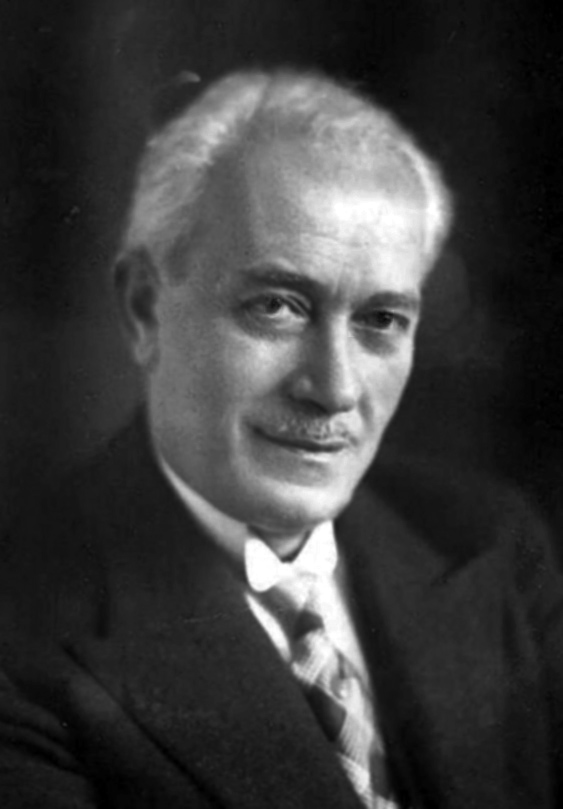
Raghib al-Nashashibi
راغب النشاشيبي
Born: Jerusalem, Ottoman Palestine
Domain: Politics & Diplomacy
Recognition: Regionally recognized
Biography
Raghib al-Nashashibi was born in 1881 in Jerusalem into one of the city's oldest and most powerful notable families, long-standing rivals of the al-Husayni clan for primacy among the Arab elite of Palestine. His father, Rashid, was a wealthy landowner who sat on the governing council of the Jerusalem mutasarrifiyya. Educated as a civil engineer at Istanbul University, the young Nashashibi entered Ottoman public service as the district engineer of Jerusalem, building the administrative and technical credentials that would define his career. His political ascent began in the late Ottoman period. Affiliated with the Committee of Union and Progress, he was elected deputy for the Jerusalem district in the Ottoman parliament and served until the empire's collapse at the end of the First World War. In 1920, the British military governor Ronald Storrs appointed him mayor of Jerusalem, succeeding Musa Kazim al-Husayni, who had been dismissed after the Nabi Musa riots. Nashashibi held the mayoralty for fourteen years, winning the 1927 municipal election outright, and earned a reputation as a modernizer who oversaw extensive public works in the rapidly growing city. Nashashibi is best remembered as the principal counterweight to Hajj Amin al-Husayni and the dominant Husayni-led national movement. After losing the mayoralty in 1934 to Hussein al-Khalidi in a contested election, he founded and led the National Defence Party in December 1934, the chief vehicle of the "opposition" (mu'arada) faction. Pragmatic and accommodationist toward the British, and at times favoring union with Transjordan, his camp clashed bitterly with the Husaynis, a rivalry that fractured Palestinian politics during the critical years of the 1936-1939 Arab Revolt. Despite the rivalry, he briefly joined the Arab Higher Committee in 1936 before withdrawing as the revolt radicalized. He received an honorary CBE from the British, a mark of his standing as a cooperative notable, though one that also exposed him to charges of collaboration from his nationalist opponents. Following the 1948 war and the Nakba, Nashashibi fled briefly to Egypt before returning to the West Bank under Jordanian rule. King Abdullah I, whose annexation of the West Bank he supported, appointed him to a succession of senior posts: minister for refugees and rehabilitation in 1949, and later governor-general and Custodian of the Holy Places in Jerusalem, alongside ministerial portfolios. He died in April 1951 at the Augusta Victoria Hospital in East Jerusalem.
Why This Person Matters
As Jerusalem's longest-serving Mandate-era mayor and founder of the National Defence Party, Raghib al-Nashashibi embodied the great Nashashibi-Husayni rivalry that shaped, and ultimately fractured, Palestinian politics before 1948.
Historical Context
Nashashibi's life spanned the three great phases of modern Palestinian history: the late Ottoman order in which urban notable families monopolized political representation, the British Mandate that turned that notable class against itself, and the catastrophe of 1948. His career crystallized the factional split between the Husayni-led "councils" (majlisiyya) and the Nashashibi-led "opposition" (mu'arada), a division that weakened the Palestinian national movement at the very moment it confronted Zionist settlement and British policy. His later embrace of Jordanian rule over the West Bank reflected the diminished, post-Nakba horizons of his generation of notables.
Historical Context
- — Born in Jerusalem, Ottoman Palestine
- — The Nakba – Palestinian catastrophe and mass displacement
- — Six-Day War and occupation of West Bank and Gaza
- — Passed away at age 70
Legacy & Influence
Nashashibi remains a defining figure in the historiography of Mandate Palestine, where the "Nashashibi-Husayni feud" is a standard lens for understanding why a unified Palestinian leadership failed to emerge. To nationalists he is often a cautionary symbol of factionalism and accommodation with the British and the Hashemites; to historians he illustrates the pragmatic, locally rooted notable politics that an era of mass mobilization rendered obsolete. The Nashashibi name endures as one of Jerusalem's preeminent families, and his fourteen-year mayoralty left a tangible imprint on the city's interwar development.
Topics & Themes
- Ottoman Era
- Jerusalem
References & Sources
- Raghib al-Nashashibi — Wikipedia — https://en.wikipedia.org/wiki/Raghib_al-Nashashibi
- Raghib al-Nashashibi — Interactive Encyclopedia of the Palestine Question (palquest) — https://www.palquest.org/en/biography/9863/raghib-al-nashashibi
- Raghib al-Nashashibi — Jerusalem Story — https://www.jerusalemstory.com/en/bio/raghib-al-nashashibi