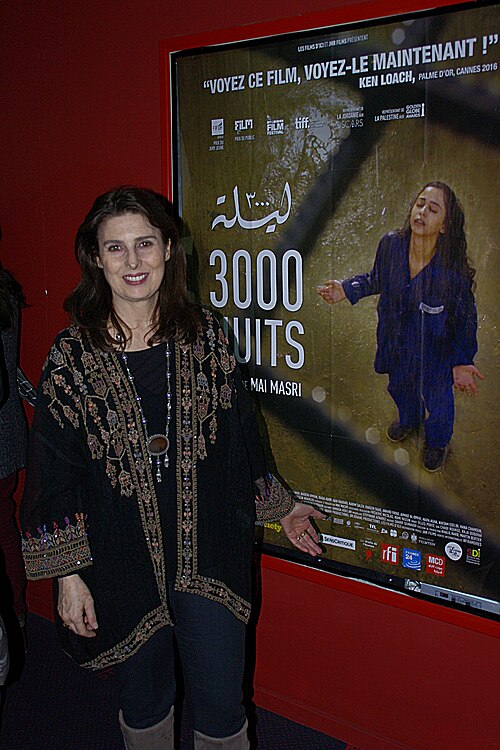
Mai Masri
مي المصري
Born: Amman, Jordan
Domain: Film & Television
Recognition: Regionally recognized
Member of the Palestinian diaspora
Biography
Mai Masri is one of the foremost Palestinian documentary filmmakers and a pioneer in chronicling the lives of women and children caught in the conflicts of the Middle East. Born in Amman to a Palestinian father from Nablus and an American mother, she grew up in Beirut and studied film production at San Francisco State University before returning to the region to build a singular body of work. Masri began directing in the early 1980s, and with her late husband, the Lebanese filmmaker Jean Chamoun, she founded Nour Productions, through which she directed and produced more than eighteen films. Her early documentaries, including "Under the Rubble" (1983) and "Children of Fire" (1990), established her humanist approach, foregrounding ordinary people, especially the young, living through war and displacement. She became internationally recognized for a series of intimate, emotionally powerful documentaries about Palestinian and Lebanese children, including "Children of Shatila" (1998) and "Frontiers of Dreams and Fears" (2001), the latter following the correspondence and eventual meeting of two girls in refugee camps in Beirut and Bethlehem across the border fence. These films, broadcast and screened worldwide, gave a tender, child's-eye perspective on dispossession. In 2015 Masri made her narrative feature debut with "3000 Nights," inspired by a true story and shot inside a former prison, which follows a newlywed Palestinian schoolteacher wrongfully imprisoned in an Israeli jail where she gives birth to and raises a son. The film won numerous international awards, including prizes at the Carthage Film Festival, and marked her successful transition from documentary to fiction. Over her career Masri's films have earned more than ninety awards at festivals around the world, and she is a member of the Academy of Motion Picture Arts and Sciences. Her work has been widely studied for its pioneering role in foregrounding Palestinian women's experiences and the everyday resilience of refugee communities. Masri's significance lies in having built one of the most sustained and humane bodies of Palestinian documentary cinema, centered on those usually left at the margins of news coverage. By insisting on the inner lives of women and children, she expanded both the subject matter and the emotional register of Palestinian filmmaking.
Why This Person Matters
She is a pioneering Palestinian documentarian whose globally awarded films center the inner lives of refugee women and children, expanding the humanist range of Palestinian cinema.
Historical Context
Mai Masri was born to a Nablus father and an American mother and grew up in a Beirut that became, after 1948 and again after 1967, a great hub of Palestinian exile and revolution. Her formative years unfolded amid the Lebanese Civil War and the concentrated tragedy of the Palestinian refugee camps, above all Shatila, scarred by the 1982 massacre, which became central subjects of her films. Returning to the region after studying in San Francisco, she turned her camera on the children and women of camps in Beirut and the occupied territories during the Intifada years, making the everyday endurance of the displaced her enduring theme. Her 2015 fiction debut '3000 Nights,' set in an Israeli women's prison, drew on the long history of Palestinian political imprisonment that runs from the Mandate through the present.
Historical Context
- — Born in Amman, Jordan
- — Six-Day War and occupation of West Bank and Gaza
Selected Works
- 3000 Nights — A Palestinian schoolteacher imprisoned in an Israeli jail gives birth to her son and raises him inside prison over eight years. Masri's debut narrative feature premiered at the Toronto International Film Festival.
- Frontiers of Dreams and Fears — A documentary following two young Palestinian girls — one in Lebanon's refugee camps, one in the West Bank — who connect online and attempt to meet at the border.
Legacy & Influence
Masri built one of the most sustained and humane bodies of Palestinian documentary cinema, with films such as 'Children of Shatila' and 'Frontiers of Dreams and Fears' that earned more than ninety international awards and centered the inner lives of refugee children long before that perspective became common. Through Nour Productions, founded with her late husband Jean Chamoun, she created an enduring base for independent regional filmmaking. As a member of the Academy of Motion Picture Arts and Sciences, she helped open international doors for Arab documentarians, and her films are now widely studied for pioneering the foregrounding of Palestinian women's experience. Her legacy lies in transforming refugees from anonymous statistics into individuals with memory, longing, and voice, expanding both the subject matter and the emotional register of Palestinian film.
Topics & Themes
- Nakba Generation
- Diaspora
References & Sources
- Mai Masri – IMDb — https://www.imdb.com/name/nm0557044/
- Mai Masri – Amman International Film Festival — https://aiff.jo/mai-masri/
- 3000 Nights: Interview with Director Mai Masri — https://www.palestine-studies.org/en/node/232341