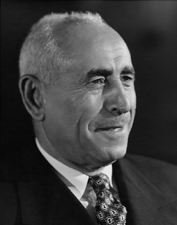
Abdul Hameed Shoman
عبد الحميد شومان
Born: Beit Hanina, Ottoman Palestine
Domain: Business & Entrepreneurship
Recognition: Regionally recognized
Biography
Abdul Hameed Shoman was born around 1888 in the village of Beit Hanina, north of Jerusalem, into a modest farming family in late Ottoman Palestine. With little formal schooling, he emigrated to the United States in 1911, settling in New York, where through years of hard labor he built a successful ready-to-wear garment manufacturing business that bore his name. His American experience exposed him to modern banking and corporate organization, lessons he would later carry back to the Arab world. In 1930, Shoman founded the Arab Bank in Jerusalem with an initial capital of just 15,000 Palestinian pounds. It was the first Arab-owned financial institution in Mandatory Palestine, conceived to serve an Arab community that had been largely excluded from the colonial and Zionist banking sectors. The bank financed Arab farmers, merchants, and small industry, and quickly became a symbol of Arab economic self-reliance. The 1948 Nakba devastated the bank's Jerusalem headquarters and scattered its clients, but Shoman rebuilt by relocating the head office to Amman, Jordan. From there the Arab Bank expanded across the Arab world, becoming one of the largest and most influential financial institutions in the Middle East. It also acquired profound symbolic importance: as Palestinians lost their homeland, the bank safeguarded the deposits and aspirations of a dispersed nation. Shoman was also a pioneering philanthropist. He directed bank profits toward Arab education, health, and scientific advancement, laying the groundwork for what would become the Abdul Hameed Shoman Foundation, a major Arab patron of science and culture. He insisted that economic strength and national dignity were inseparable. He led the bank until his death in 1974, by which point the Arab Bank had grown into a pillar of the regional economy. His descendants continued at its helm for generations, and the institution remains one of the enduring achievements of Palestinian and Arab enterprise. Shoman's life embodied the trajectory of an early generation of Palestinian entrepreneurs: rising from rural poverty, succeeding in the diaspora, and channeling capital into building durable national institutions that outlasted the loss of the land itself.
Why This Person Matters
He founded the Arab Bank, the first Arab-owned financial institution in Palestine, which became a pillar of the Middle Eastern economy and a financial lifeline for a dispersed Palestinian nation.
Historical Context
Shoman was born around 1888 into a modest farming family in Beit Hanina in late-Ottoman Palestine, and like many of his generation emigrated to the United States in 1911, where he learned modern banking and enterprise. He founded the Arab Bank in Jerusalem in 1930, during the British Mandate, to serve an Arab community largely excluded from the colonial and Zionist banking sectors and increasingly anxious over land sales and dispossession. The 1948 Nakba destroyed the bank's Jerusalem headquarters and scattered its clients, forcing Shoman to relocate the head office to Amman and rebuild from the heart of the Palestinian and Arab diaspora. His career traced the arc from rural Ottoman poverty to the catastrophe of 1948 and the reconstruction of Palestinian economic life in exile.
Historical Context
- — Born in Beit Hanina, Ottoman Palestine
- — The Nakba – Palestinian catastrophe and mass displacement
- — Six-Day War and occupation of West Bank and Gaza
- — Passed away
Legacy & Influence
The Arab Bank, the first Arab-owned financial institution in Palestine, grew under Shoman into one of the largest and most influential banks in the Middle East and a pillar of the regional economy. As Palestinians lost their homeland, it acquired profound symbolic weight, safeguarding the deposits and aspirations of a dispersed nation and embodying Arab economic self-reliance. His philanthropy laid the groundwork for the Abdul Hameed Shoman Foundation, which became a major Arab patron of science and culture. His descendants led the bank for generations, and his life endures as a model of the Palestinian entrepreneur who built durable national institutions that outlasted the loss of the land.
Topics & Themes
- Ottoman Era
References & Sources
- Abdul Hameed Shoman — https://en.wikipedia.org/wiki/Abdul_Hameed_Shoman
- Abd al-Hamid Shuman — https://www.jerusalemstory.com/en/bio/abd-al-hamid-shuman
- Abdul Hameed Shoman: The Palestinian Founder of the Arab Bank — https://www.palestineeconomy.ps/en/Article/155/Abdul-Hameed-Shoman-The-Palestinian-Founder-of-the-Arab-Bank