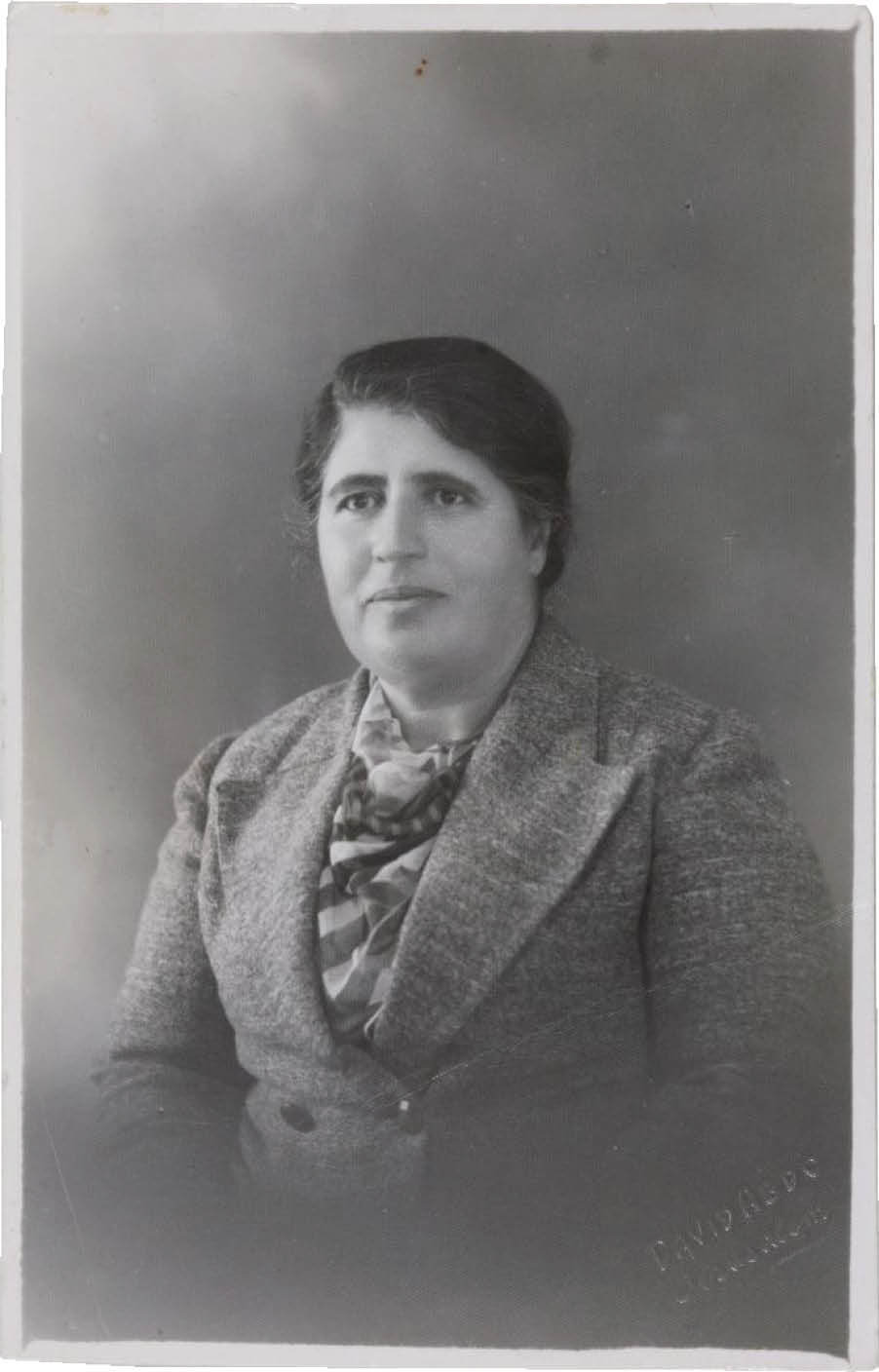
Nabiha Nasir
نبيهة ناصر
Born: Birzeit, Ottoman Palestine
Domain: Civil Society & Religion
Recognition: Regionally recognized
Biography
Nabiha Nasir was born in 1891 in the small town of Birzeit, north of Jerusalem, then part of Ottoman Palestine. She was the eldest daughter of the Reverend Hanna Nasir, a respected Anglican clergyman of the town, and the educator Sa'da Shatara, and she grew up in a household that prized both faith and learning. She received her schooling at the Bethlehem Anglican (Evangelical) High School, where she studied history, Arabic grammar, languages, and music, and after graduating she travelled to Sudan to join a sister, refining her command of English before returning home with a clear conviction that the girls of her region deserved an education of their own. In 1924 Nasir founded a small elementary school for girls in Birzeit at a time when there were almost no schools in the surrounding villages and when education for women was a rare privilege. Her father lent his support and helped develop the institution, which the townspeople came to call "madrasat al-sit Nabiha" — the school of Lady Nabiha. She served as its long-time directress and animating spirit, teaching, gardening, marketing, and even playing piano in the school band, shaping a curriculum of languages, geography, mathematics, history, and the arts. In 1930 the school broadened into a co-educational secondary institution drawing students from across Palestine, and by the early 1950s it had begun offering the first years of college-level instruction. Nasir matters because the modest girls' school she built became the nucleus of Birzeit University, today one of the leading universities in Palestine, and because she stood among the pioneering generation of Palestinian women who insisted that female education was a national, not merely private, cause. She did not confine herself to the classroom: she was active in the emerging Palestinian women's movement and in the nationalist ferment of the 1936 Arab revolt, lending her voice to the defence of her people during the British Mandate. Her most visible public moment came in October 1938, when she addressed the Eastern Women's Conference for the Defence of Palestine in Cairo — convened under the patronage of the Egyptian Feminist Union and figures such as Huda Sha'rawi — where she argued for Arab unity as the means to confront the dangers facing Palestine, sharing the platform with leading Arab feminists of the day. Through such interventions she helped link the cause of women's advancement to the broader anti-colonial and national struggle. Nasir died in 1951, on the eve of the school's transformation toward higher education and only a few years after the Nakba of 1948 had shattered Palestinian society. She did not live to see her foundation become a university, but the institution she planted has been carried forward by generations of educators, students, and members of her own family, and it remains a living monument to her vision of education as liberation.
Why This Person Matters
She founded the 1924 girls' school in Birzeit that grew into Birzeit University, making her a pioneer of Palestinian women's education.
Historical Context
Nasir's life spanned the closing decades of Ottoman rule and the whole of the British Mandate, an era when Palestinian society was modernising its institutions even as it confronted Zionist settlement and colonial control. Girls' education was scarce and largely the preserve of missionary or elite urban schools, and rural women had almost no access to learning. By building a school in a small hill town and later joining the women's organising of the 1930s — culminating in the 1938 Cairo conference held during the Arab Revolt — Nasir embodied the convergence of social reform, female emancipation, and anti-colonial nationalism that defined her generation, dying in 1951 in the shadow of the 1948 Nakba.
Historical Context
- — Born in Birzeit, Ottoman Palestine
- — The Nakba – Palestinian catastrophe and mass displacement
- — Six-Day War and occupation of West Bank and Gaza
- — Passed away at age 60
Legacy & Influence
Nabiha Nasir's foundation evolved from a one-room girls' school into Birzeit University, today one of Palestine's foremost academic and intellectual institutions, with thousands of students and a global reputation as a centre of Palestinian learning and resilience. Her name endures in the university's own history and commemorations, and she is honoured as a symbol of Palestinian women's education and self-determination. Generations of her family — including later Birzeit University presidents named Nasir — carried the project forward, so that her insistence on educating the girls of her town reverberates across Palestinian higher education a century later.
Topics & Themes
- Ottoman Era
- West Bank
References & Sources
- Nabiha Nasir — Birzeit University Biography — https://www.birzeit.edu/en/biography/nabiha-nasir
- Nabiha Nasir — This Week in Palestine — https://thisweekinpalestine.com/nabiha-nasir/
- Birzeit University: The Girls' School That Became Palestine's Foremost University — Al Jazeera Encyclopedia — https://www.aljazeera.net/encyclopedia/2017/6/11/جامعة-بيرزيت-مدرسة-البنات-التي-تحولت